
 Feb, 7 2026
When you’re managing a chronic condition like high blood pressure or type 2 diabetes, your doctor might prescribe a combination pill-a single tablet with two or more medications in one. It sounds convenient. Fewer pills to remember. But is it cheaper? The answer might surprise you: in most cases, buying the same drugs as separate generic pills costs far less-even when one of the ingredients is still under patent.
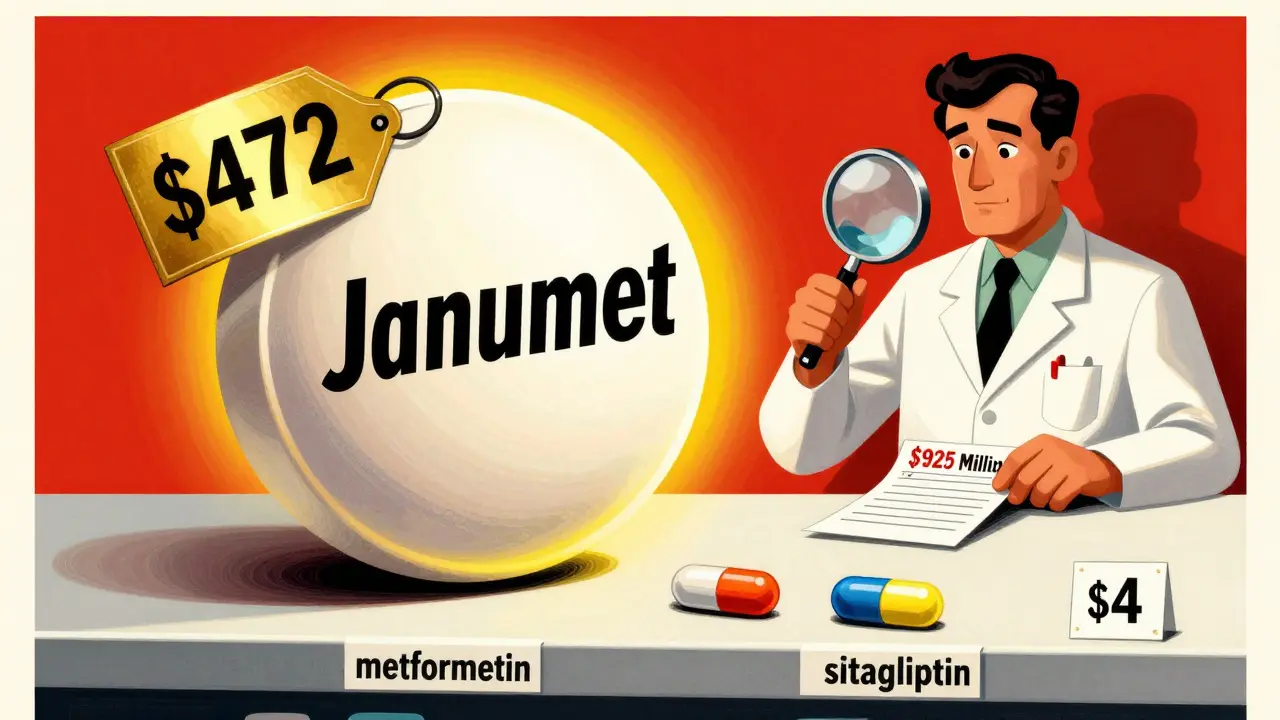
Take Janumet, a popular combo for type 2 diabetes. In 2016, Medicare Part D spent over $1.4 billion on just this one branded combination. Why? Because it combines sitagliptin and metformin. But metformin? It’s been generic for years. At Walmart, a 30-day supply costs as little as $4. The branded Janumet? Around $472 for the same amount. That’s more than 100 times the price. And Janumet isn’t an outlier. A 2018 study in JAMA Internal Medicine found that 29 branded combination drugs cost Medicare $925 million more than if patients had simply taken the generic versions of each drug separately. That’s not a rounding error. That’s billions of dollars wasted.
Why Do Combo Pills Cost So Much?
It’s not about manufacturing. It’s about pricing strategy. Drugmakers know that once a drug goes generic, its price crashes. So they bundle it with a newer, still-patented drug. This creates what experts call “evergreening”-a way to keep charging premium prices even when one component is dirt cheap.
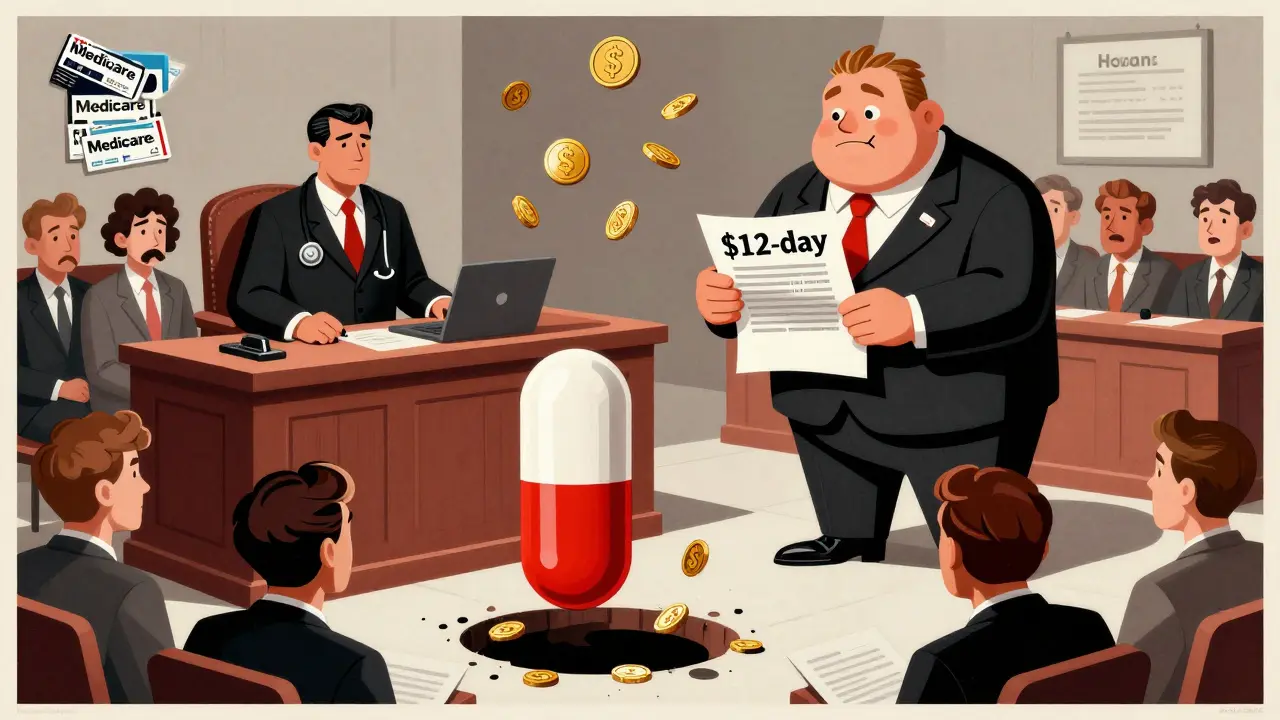
For example, Nexlizet combines ezetimibe (a generic cholesterol drug) with bempedoic acid (a newer, expensive one). Even though ezetimibe costs pennies, Nexlizet still sells for $12 a day in the U.S. Why? Because the patent on bempedoic acid lets the company set the price. The system doesn’t force them to lower the combo price just because one ingredient is generic. In fact, the average combo pill costs 60% of what two branded versions would cost-but 300% to 1,000% more than the same drugs bought separately as generics.
The Math Doesn’t Add Up
Let’s break it down with real numbers. Here’s what happens when you compare combo pills to their individual generic parts:
- Entresto (sacubitril/valsartan) for heart failure: $400/month. Valsartan alone? A generic version costs $12. Sacubitril? Still branded, but even if you add the cost of generic valsartan + branded sacubitril, you’re still under $200.
- Kazano (alogliptin/metformin): $425/month. Metformin? $10/month as a generic. The math is clear: you’re paying $415 extra for convenience.
- Advair Diskus (fluticasone/salmeterol) for asthma: $300/month. Both ingredients have generic versions available. A generic combo exists, but even that costs more than buying two separate generics.
The pattern is consistent: when one drug in the combo is generic, the combo still costs 10 to 15 times more than buying the two separately. And yet, doctors keep prescribing them. Why? Because they’re easier to manage. Fewer pills. Fewer refills. Less confusion for patients.
But What About Adherence?
Drug companies argue that combo pills improve adherence. And they’re not wrong. Studies show patients are 15% to 20% more likely to take their meds when they’re in one pill instead of two or three. For someone with diabetes, heart disease, and high blood pressure, that matters. Missing doses can lead to hospitalizations, which cost far more than the drug difference.
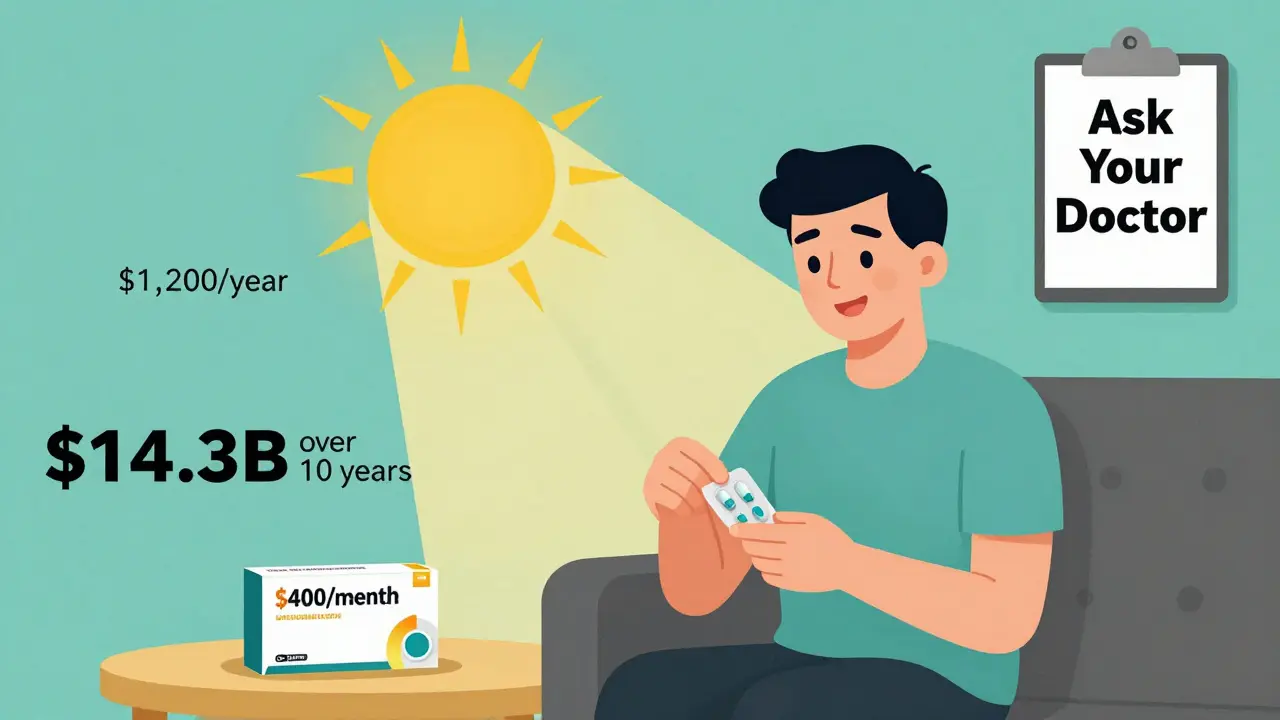
But here’s the catch: that benefit doesn’t justify the price gap. A 2020 University of Michigan study found that switching patients from branded combos to separate generics didn’t hurt adherence-especially when pharmacists helped with packaging. One pill in a blister pack, labeled clearly, works just as well. And it saved the health system $1,200 per patient per year.
Who’s Paying the Difference?
Medicare Part D paid $925 million more in 2016 for these combos than it should have. That’s not a drop in the bucket. It’s money taken from the pockets of taxpayers and beneficiaries. The Congressional Budget Office projects that over the next decade, Medicare will spend an extra $14.3 billion on these overpriced combos compared to generic alternatives.
Private insurers aren’t immune. Many require prior authorization before approving combo drugs. Some even have “carve-outs”-they exclude certain combos from their formularies entirely. Why? Because they’re too expensive for the benefit they deliver.
Meanwhile, generic manufacturers are stepping in. More generic combos are hitting the market. But even those often cost more than buying two separate generics. And many patients don’t know they have a choice.
What Can You Do?
If you’re on a combo drug, ask your pharmacist or doctor: “Can I get the same ingredients as separate generics?” If one of the drugs is already generic, the answer is often yes.
Here’s how to check:
- Look up the brand name of your combo pill.
- Find out what active ingredients it contains.
- Search for those ingredients individually as generics.
- Compare prices at pharmacies like Walmart, Costco, or CVS. Many offer $4 to $10 generic programs.
- Ask your doctor if switching is safe. For most conditions-hypertension, diabetes, high cholesterol-it is.
Some doctors worry about switching. They think it’s risky. But the science says otherwise. The American College of Cardiology acknowledges that for many patients, separate generics work just as well, especially with proper counseling.
The Bigger Picture
The Inflation Reduction Act of 2022 started to change this. It lets Medicare negotiate drug prices-including combos-for the first time. That could bring down prices. But it won’t fix everything. Until pharmacies and prescribers routinely offer generic alternatives, patients will keep overpaying.
Pharmaceutical companies aren’t evil. They’re following the rules of a broken system. The system rewards high prices for combos because it doesn’t link payment to actual value. It doesn’t penalize companies for bundling cheap generics with expensive new drugs. And it doesn’t make it easy for patients to choose the cheaper option.
The real solution? Transparency. Clear labeling. Pharmacist-led counseling. And insurance plans that cover the cheaper option first.
For now, the power is in your hands. Don’t assume the combo pill is the best choice. Ask the question. Do the math. You could save hundreds-or even thousands-each year.
Jessica Klaar
February 8, 2026 AT 20:55I’ve been on a combo pill for years and had no idea I could save hundreds by switching. My pharmacist actually suggested it last month-said my meds were $380/month as a combo, but $28 total as generics. I nearly cried. I’ve been paying for convenience I didn’t need.
Now I’m on separate pills in a pill organizer. My doctor was skeptical, but I’ve been taking them perfectly for 3 months. No side effects, no missed doses. Seriously, if you’re on a combo, ask. Just ask.
glenn mendoza
February 9, 2026 AT 07:25It is with profound regret that I must observe the systemic failures within the pharmaceutical pricing architecture of the United States. The commodification of essential therapeutics, particularly through the strategic bundling of generic and patented agents, constitutes a moral hazard of unprecedented scale. The $925 million in excess expenditure by Medicare, as cited, is not merely an economic inefficiency-it is a betrayal of public trust. We must advocate for structural reform, not merely individual cost-saving maneuvers.
Angie Datuin
February 10, 2026 AT 10:30My mom’s on one of these combos. She’s on fixed income and was about to drop her meds because she couldn’t afford it. We found out the generic version was $12 a month. She’s been fine since switching. I wish more doctors just asked before prescribing.
Camille Hall
February 10, 2026 AT 18:45As someone who’s been managing type 2 diabetes for 12 years, I want to say: yes, combos are easier. But they’re not always better. I used to take Janumet. $470/month. Then I switched to metformin + sitagliptin-separate, but in a blister pack from my pharmacy. Cost? $18/month. My A1c didn’t change. My bank account did.
Pharmacists are your secret weapon. Talk to them. They know the prices. They’ve seen this a hundred times. And they’re not trying to sell you anything-they just want you alive and healthy.
Ritteka Goyal
February 12, 2026 AT 12:06OMG this is so true i was like wait what how is this even legal in usa? in india we have generic pills for everything and they cost like 50 rupees like seriously why is america so broken?? i mean like i get the patent thing but why not just make combo generics too?? like why do they have to rip people off like this?? my cousin in california pays $500 for a pill that costs $5 here lol so unfair i cant even believe this is real
Ashlyn Ellison
February 13, 2026 AT 20:42My doctor told me combo pills were "better for adherence." I didn’t argue. Then I Googled the prices. I switched. Saved $400/month. I didn’t miss a dose. The system is rigged.
Lyle Whyatt
February 14, 2026 AT 06:46Let me tell you something-this isn’t just about money. It’s about dignity. Imagine being told you need a pill that costs $400 a month… and then finding out you could’ve gotten the same effect for $15. That’s not healthcare. That’s extortion wrapped in a white coat.
I work in a clinic. I’ve seen people cry because they have to choose between insulin and groceries. And the companies? They’re out there marketing these combos like they’re luxury handbags. It’s obscene.
And don’t get me started on how pharmacies don’t even *show* you the generic option unless you ask. It’s like they’re hiding the truth. I’m done being polite about this. This is theft.
MANI V
February 15, 2026 AT 22:35This is why America is falling apart. Everyone wants something for nothing. You want cheap meds? Then stop being lazy. Take two pills. It’s not that hard. You think your time is worth more than $400? You’re not entitled to convenience at the expense of the system. This isn’t a problem with Big Pharma-it’s a problem with entitled Americans who think they deserve everything handed to them. Stop whining. Take the pills. Pay the price. Or get off the grid.
Susan Kwan
February 16, 2026 AT 07:42Oh wow, so the system is broken? Shocking. Next you’ll tell me that CEOs get paid 300x more than their workers. Or that insurance companies deny claims to save pennies. What a surprise. I’m sure the 10% of patients who switched saved money. But what about the 90% who got confused, missed doses, or had adverse reactions? You’re not solving the problem-you’re just enabling reckless cost-cutting.
And yes, I’m being sarcastic. Because this whole thing is a joke.
Random Guy
February 16, 2026 AT 17:37so like i just found out my combo pill is 100x more expensive?? like bro that’s wild. i thought i was being smart by taking one pill. turns out i was just being robbed. i just switched to generics and now i have $300 extra in my bank. also my dog is now wearing a tiny hat. unrelated. but still. wild.
Ryan Vargas
February 17, 2026 AT 19:30Let’s not pretend this is accidental. The entire pharmaceutical-industrial complex is designed to extract maximum rent from a captive population. The FDA’s approval process, the patent system, the lack of price transparency-all are engineered to prevent competition. The combo pill is not a medical innovation. It is a legal loophole. A corporate tax shelter disguised as a treatment.
And the fact that we’re still debating whether people should take two pills instead of one? That’s the real tragedy. We’ve been conditioned to equate convenience with value. We’ve been trained to accept exploitation as normal. This isn’t capitalism. This is feudalism with better marketing.
Tasha Lake
February 17, 2026 AT 21:58From a pharmacoeconomic standpoint, the cost differential between branded combination products and their generic monotherapy equivalents is stark, particularly when one component has undergone patent expiration. The marginal utility of adherence improvement-while statistically significant-is not commensurate with the incremental cost burden, especially under value-based reimbursement models.
Moreover, the formulary exclusion of high-cost combos by PBMs is a rational response to the lack of therapeutic superiority. The real barrier lies in prescriber inertia and patient education gaps. Interventions such as pharmacist-led medication therapy management (MTM) have demonstrated a 22% reduction in non-adherence without increased pill burden. The data supports de-implementation of high-cost combos in favor of tiered generic strategies.