
 Dec, 27 2025
CYP2D6 Ultrarapid Metabolizer Risk Calculator
This tool helps you understand your risk of adverse effects from codeine based on your ethnicity. Codeine can be dangerous for people with CYP2D6 ultrarapid metabolizer status, as their bodies convert codeine to morphine too quickly.
Risk Information
Ultrarapid metabolizers convert codeine to morphine 3.5-4.5x faster than normal.
This can lead to toxic morphine levels, causing respiratory depression within hours.
The FDA warns against codeine use for children under 12 and ultrarapid metabolizers.
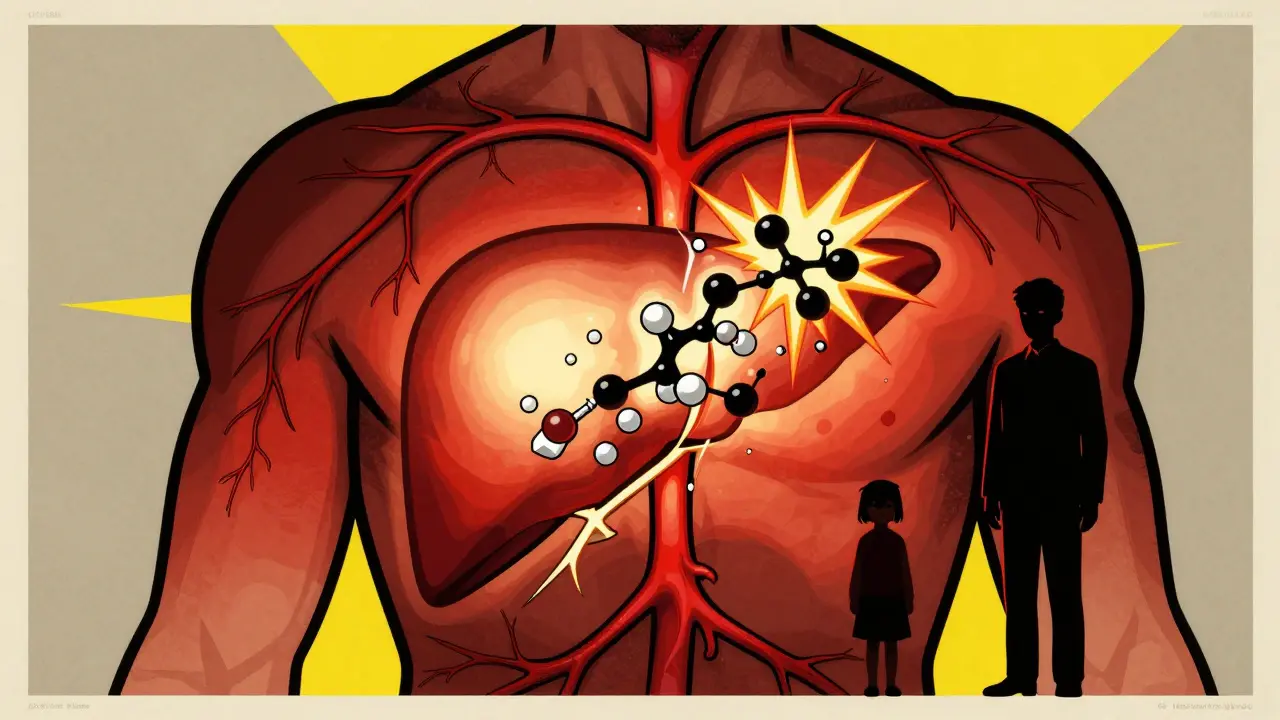
Codeine is one of the most common painkillers prescribed after surgery, for coughs, or for mild to moderate pain. But for some people, even a single pill can be deadly. It’s not because they took too much. It’s because their body turns codeine into morphine too fast.
What Happens When Your Body Turns Codeine Into Morphine Too Quickly?
Codeine itself doesn’t relieve pain. It’s just a placeholder. Your liver has to convert it into morphine - the real painkiller - using an enzyme called CYP2D6. For most people, this conversion happens at a steady, safe pace. But about 1 to 7% of people, depending on their ancestry, have a genetic quirk: they have extra copies of the CYP2D6 gene. These people are called ultrarapid metabolizers.- They turn codeine into morphine 3.5 to 4.5 times faster than normal.
- Morphine builds up in their blood so quickly it can reach toxic levels within hours.
- That leads to respiratory depression - slowed or stopped breathing - which can cause brain damage or death.
Who’s at Risk? It’s Not Just Kids
Most people think this is only a problem for children after tonsillectomies. It’s not. While children are especially vulnerable because their bodies are smaller and less able to handle sudden morphine spikes, adults are at risk too. The risk varies by ethnicity:- Up to 29% of people in North Africa and Ethiopia are ultrarapid metabolizers.
- 3 to 7% of Europeans and North Americans are.
- Only 1 to 2% of East Asians are.
What Do the Experts Say?
In 2020, the Clinical Pharmacogenetics Implementation Consortium (CPIC) - a group of top pharmacologists and geneticists - issued a clear, unambiguous warning: Don’t use codeine or tramadol in ultrarapid metabolizers. Their guidelines say: if your CYP2D6 activity score is above 2.25, these drugs are unsafe. Dr. Audrey Phillips, a lead author of the CPIC guidelines, put it bluntly: “Case reports detail the occurrence of severe or life-threatening side effects following standard doses of codeine in ultrarapid metabolizers.” The FDA’s 2013 safety alert still stands. It includes a boxed warning - the strongest kind - on all codeine labels: “Respiratory depression and death have occurred in children who received codeine following tonsillectomy or adenoidectomy, and had evidence of being CYP2D6 ultrarapid metabolizers.”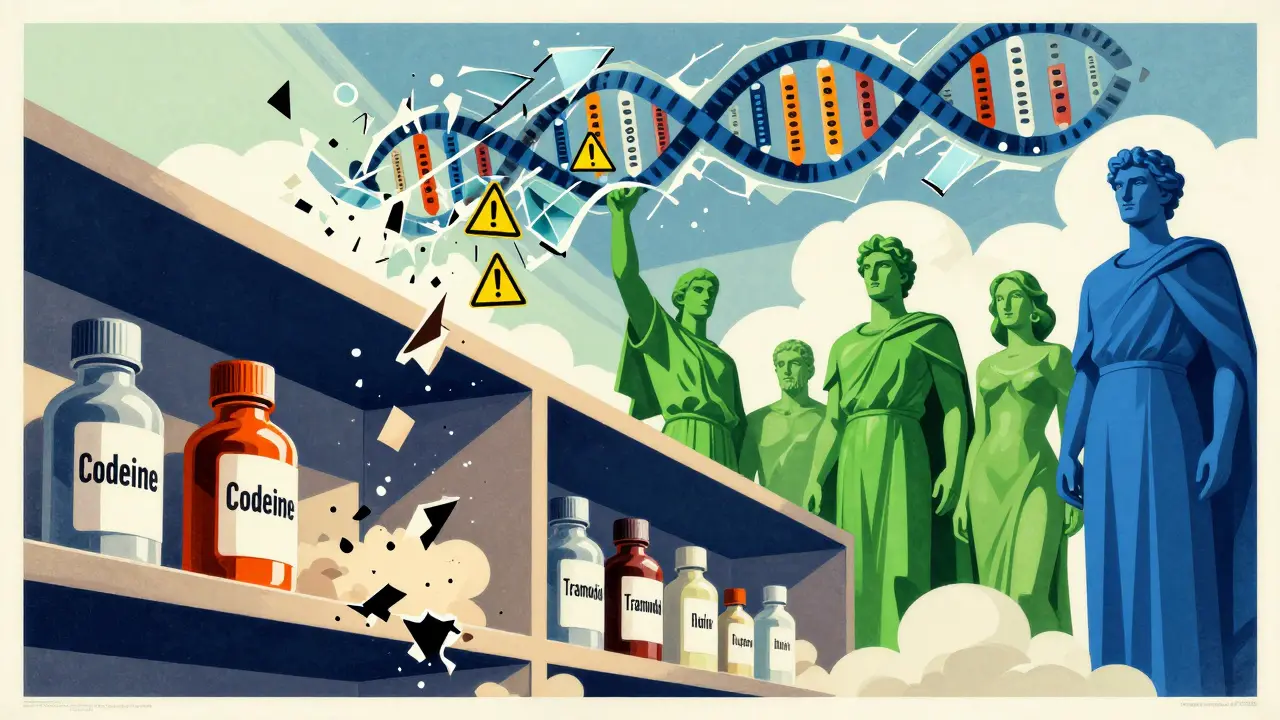
How Do You Know If You’re an Ultrarapid Metabolizer?
You can’t tell by looking. You can’t tell by how you respond to other drugs. The only way to know is through a genetic test. The test looks at your CYP2D6 gene. It’s simple - a cheek swab or blood sample. Results usually take 3 to 14 days. Some labs offer faster turnaround, but most require a doctor’s order. The cost? Between $200 and $500. Insurance often requires prior authorization. There’s no routine screening in most clinics. Only about 15 to 20% of major U.S. hospitals have integrated pharmacogenetic testing into their prescribing systems. Most doctors still don’t think to ask. But here’s the problem: if you’ve had a bad reaction to codeine before - extreme drowsiness, trouble waking up, nausea, vomiting, or slow breathing - that’s a red flag. You might already be an ultrarapid metabolizer.What Are the Safe Alternatives?
If you’re an ultrarapid metabolizer, you need pain relief - but not codeine or tramadol. The good news? There are safer options.- Morphine - already active. Doesn’t need CYP2D6 to work.
- Hydromorphone - same as morphine, no conversion needed.
- Fentanyl - works through a different pathway entirely.
- Non-opioid options - acetaminophen, ibuprofen, naproxen, or gabapentin for nerve pain.
Why Isn’t Everyone Getting Tested?
The science is clear. The risks are proven. The alternatives exist. So why is codeine still prescribed? One reason: inertia. Many doctors learned to prescribe codeine decades ago. It’s cheap, familiar, and still listed in old guidelines. Another reason: testing isn’t fast enough. If a patient comes in after surgery needing pain relief, waiting 10 days for genetic results isn’t practical. There’s also a lack of integration. Most electronic health records don’t flag CYP2D6 status automatically. A doctor prescribing codeine doesn’t see a warning like they would for a drug allergy. And cost remains a barrier. While $200-$500 isn’t huge, many patients can’t afford it without insurance approval - and many insurers won’t approve it unless there’s already a history of adverse reaction.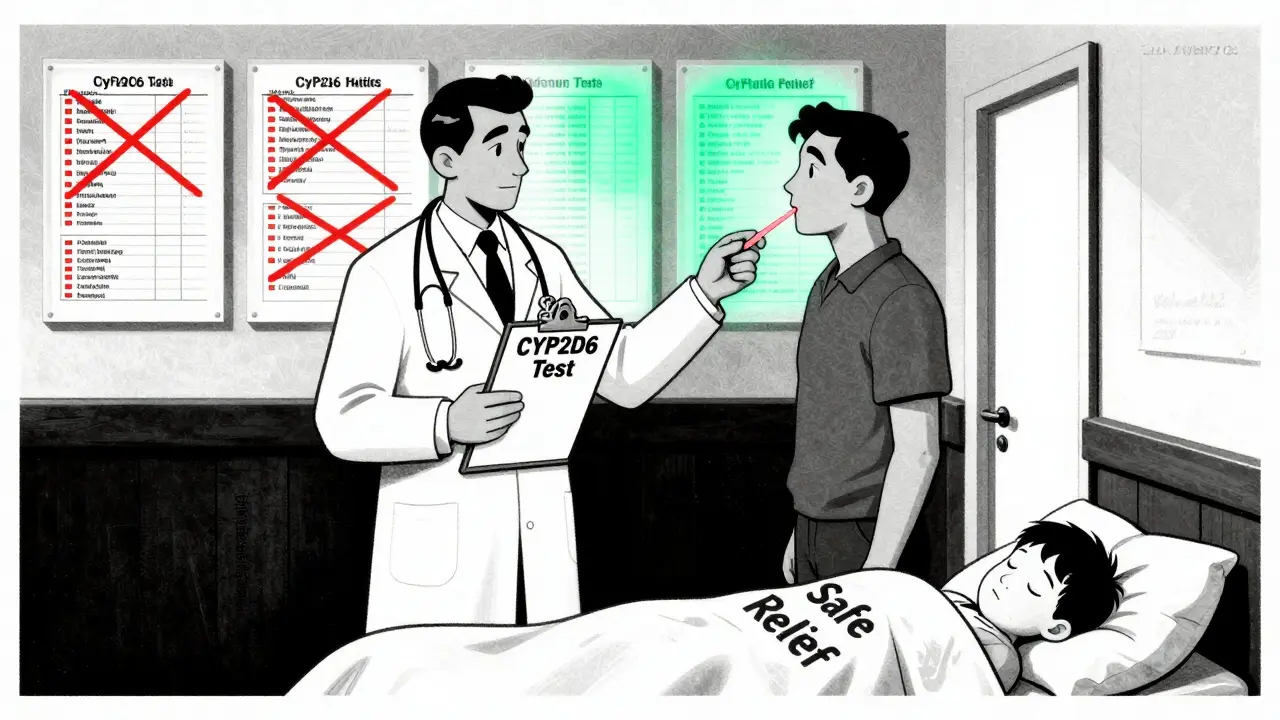
The Bigger Picture: Personalized Medicine Is Here
This isn’t just about codeine. It’s about how we think about medicine. We’ve spent decades treating everyone the same. “One size fits all” was the norm. But now we know: your genes change how drugs work in your body. CYP2D6 isn’t the only gene that matters. Others affect how you respond to antidepressants, blood thinners, and chemotherapy drugs. The future of medicine isn’t guessing. It’s knowing. Research is moving fast. Vanderbilt University is running a $2.5 million NIH-funded trial to develop a point-of-care CYP2D6 test that gives results in under two hours. If it works, doctors could test you in the ER and choose the right painkiller before you leave. Dr. Mary Relling of St. Jude Children’s Research Hospital predicts codeine will become a drug of historical interest within the next decade. She’s not alone. More and more experts agree: the risks outweigh the benefits.What Should You Do?
If you’ve ever taken codeine and felt dangerously sleepy, had trouble waking up, or had trouble breathing - tell your doctor. Ask if you should get tested for CYP2D6 status. If you’re planning surgery - especially for your child - ask: “Is codeine the only option? Are there alternatives?” Don’t accept “it’s what we always use” as an answer. If you’re of North African, Ethiopian, or European descent and you’ve never been tested, consider asking your doctor about pharmacogenetic testing - especially if you’ve had unexplained side effects from painkillers. And if you’re a parent: never give your child codeine for cough or pain after surgery. It’s not worth the risk.Frequently Asked Questions
Can I be tested for CYP2D6 ultrarapid metabolizer status without a doctor’s order?
In most countries, including the U.S. and U.K., you need a healthcare provider to order a CYP2D6 genetic test. Direct-to-consumer tests like 23andMe don’t include CYP2D6 analysis in their standard reports. Some specialized labs offer direct access, but results still need interpretation by a pharmacist or genetic counselor. Don’t rely on online tests without clinical guidance.
If I’m an ultrarapid metabolizer, does that mean I can never take codeine again?
Yes. Even one dose can be dangerous. The risk doesn’t go away over time. Your genes don’t change. Once you’re identified as an ultrarapid metabolizer, you should avoid all codeine and tramadol products - including over-the-counter cough syrups that contain codeine. Always check labels and ask pharmacists.
Are there symptoms I should watch for if I accidentally took codeine?
Yes. Watch for extreme drowsiness, difficulty waking up, slow or shallow breathing, confusion, cold/clammy skin, nausea, vomiting, or loss of appetite. If you or someone else shows these signs after taking codeine, seek emergency help immediately. This is a medical emergency - not just a bad reaction.
Is genetic testing covered by insurance?
Sometimes. Insurance coverage varies widely. Most insurers require prior authorization and proof of a clinical reason - like a previous adverse reaction or planned surgery. Testing is more likely to be covered if you’re in a high-risk group (e.g., child post-tonsillectomy) or if your doctor documents the potential for harm. Out-of-pocket costs range from $200 to $500 if not covered.
What if I’m already on codeine? Should I stop?
Don’t stop suddenly - especially if you’ve been taking it regularly. Talk to your doctor. If you suspect you might be an ultrarapid metabolizer, ask for testing. In the meantime, monitor for signs of overdose. If you’re using codeine for chronic pain, your doctor can switch you to a safer alternative like morphine, oxycodone, or non-opioid options.
Anna Weitz
December 28, 2025 AT 08:14So we're just supposed to guess if we're gonna die from a pill? No screening no warning just hope you don't get lucky
My cousin died after a tonsillectomy and they never even tested her
That's not medicine that's Russian roulette with a prescription
Jane Lucas
December 29, 2025 AT 01:21my mom got codeine after her knee surgery and slept for 18 hours straight
we thought she was just tired turns out she was almost gone
they never asked about her ancestry or anything
she's from germany and now she refuses all opioids
Elizabeth Alvarez
December 30, 2025 AT 03:10They don't test you because they don't want you to know the truth
The pharmaceutical industry controls the labs the doctors the guidelines everything
They make billions off codeine and tramadol
Genetic testing would kill that profit stream
That's why your insurance won't cover it
That's why your doctor doesn't know about it
That's why they still prescribe it to kids
It's not negligence it's intentional
They'd rather you die than lose their cash cow
Look at the numbers 21 children dead and still no mass warning
That's not incompetence that's murder by profit
dean du plessis
December 30, 2025 AT 18:21Man this is wild
Im from south africa and we use codeine in everything cough syrup pain meds
Never heard of this until now
Guess i got lucky
But seriously if you're from africa or europe and you've ever felt weird after codeine
Get tested
Its not worth the risk
My uncle had a bad reaction and switched to morphine
Now he's fine
Simple fix if you know the problem
Kylie Robson
December 31, 2025 AT 18:30From a clinical pharmacogenomics perspective the CYP2D6 ultrarapid metabolizer phenotype is characterized by gene duplication or multiplication leading to increased enzyme activity >2.25 on the CPIC activity score scale
Codeine is a prodrug requiring CYP2D6-mediated O-demethylation to morphine which is the active moiety
Ultrarapid metabolizers exhibit supratherapeutic morphine concentrations resulting in opioid toxicity
Standard dosing protocols are pharmacokinetically inappropriate for this genotype
The FDA boxed warning and CPIC guidelines are evidence-based and should be considered standard of care
Failure to implement pre-prescription genotyping constitutes a breach of therapeutic diligence
Pharmacogenomic integration into EHRs is not optional it's imperative for patient safety
Caitlin Foster
January 2, 2026 AT 05:53WAIT WAIT WAIT
So you're telling me my grandma could've died from a cough syrup?!!
And we've been giving this to kids for DECADES?!
AND NO ONE TOLD US?!
THIS IS INSANE
MY DOCTOR IS A MONSTER
AND I'M NEVER TAKING CODEINE AGAIN
EVER
EVER EVER EVER
SHARE THIS POST
SAVE LIVES
PLEASE
PLEASE
PLEASE
Todd Scott
January 3, 2026 AT 15:45As someone raised in Ethiopia I've seen this firsthand
Codeine is everywhere here from street vendors to pharmacies
People don't know about CYP2D6
They think if it's sold openly it's safe
But the prevalence of ultrarapid metabolizers here is up to 29%
That's nearly one in three people
My cousin died at 14 after a simple cold
They gave him codeine syrup and he never woke up
No one knew why
Now I work with a clinic that does free genetic screening
We've saved at least 12 lives in the last year
It's not expensive
It's not complicated
It's just not prioritized
Doctors need to stop thinking this is a western problem
It's a global problem
And we're paying for it with lives
Andrew Gurung
January 3, 2026 AT 17:57OMG I'm literally the poster child for this
I took codeine after wisdom teeth removal and woke up in the ER
They said I was one breath away from brain death
Turns out I'm a CYP2D6 ultrarapid metabolizer
My doctor was like 'huh weird'
Like I'm some kind of genetic unicorn
But now I'm basically a medical legend in my family
My mom won't let me near any opioid
And I've become the family pharmacist
Everyone comes to me before they take anything
Codeine? No.
Tramadol? Hell no.
It's not a drug it's a death sentence for people like me
And yeah I'm dramatic but I'm also alive so... 😎
Nikki Thames
January 5, 2026 AT 00:57It is imperative that we acknowledge the profound ethical and clinical implications of this pharmacogenetic disparity. The continued prescription of codeine in the absence of genotypic stratification constitutes a systemic failure of medical ethics, predicated upon the archaic paradigm of uniform therapeutic intervention. The mortality data are unequivocal, and the existence of viable, safer alternatives renders the persistence of codeine in clinical practice not merely negligent, but morally indefensible. It is incumbent upon regulatory bodies, academic institutions, and healthcare providers to implement mandatory pharmacogenomic screening protocols prior to the administration of prodrug opioids. The preservation of human life is not contingent upon cost, convenience, or institutional inertia. The time for passive observation has expired; active, universal intervention is not only warranted-it is obligatory.