
 Mar, 25 2026
Clozapine Dose Adjustment Calculator
Current Dose Adjustment
Calculate the appropriate Clozapine dose based on your smoking status
How This Works
Tobacco smoke induces the CYP1A2 enzyme, which metabolizes Clozapine faster. This means:
- Smokers need 40-60% higher doses to maintain therapeutic levels
- Quitting smoking requires dose reduction (30-50%) to avoid toxicity
- Changes happen within 48-72 hours of smoking status change
Dose Adjustment Result
Quick Summary / Key Takeaways
- Clozapine levels drop significantly (30-50%) when a patient smokes tobacco due to enzyme induction.
- CYP1A2 is the primary enzyme responsible for breaking down Clozapine, and tobacco smoke activates it.
- Stopping smoking without adjusting the dose can lead to dangerous toxicity and side effects.
- Starting smoking without adjusting the dose often leads to treatment failure and symptom relapse.
- Therapeutic Drug Monitoring (TDM) is essential whenever smoking habits change.
If you are managing treatment-resistant schizophrenia, you know Clozapine is the gold standard. It works where other medications fail. But there is a hidden trap that can turn this life-saving drug into a liability overnight. It isn't another medication or a food item. It is the cigarette you might light up in the morning.
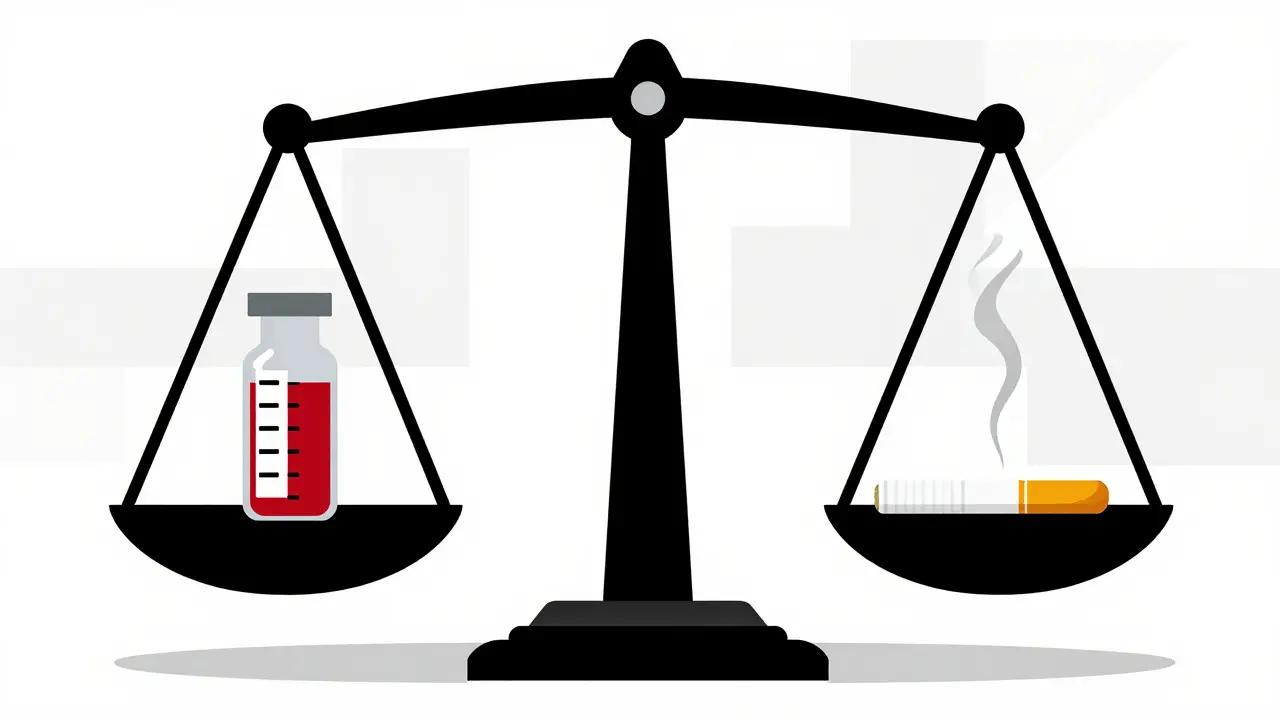
The interaction between Clozapine and Tobacco Smoke is one of the most critical issues in psychiatric pharmacology. It isn't just a minor side note; it fundamentally changes how your body processes the drug. When you smoke, your liver ramps up production of an enzyme called CYP1A2. This enzyme eats Clozapine faster than usual. The result? Your blood levels of the medication plummet, often by half. Suddenly, the drug that was keeping you stable is no longer working.
Conversely, if you quit smoking, that enzyme slows down. The drug builds up in your system. Without a dose reduction, you risk severe toxicity, including seizures and heart inflammation. This isn't theoretical. Clinicians see this every day. Understanding the mechanics of this interaction is the difference between stability and a hospital admission.
How Tobacco Smoke Changes Drug Metabolism
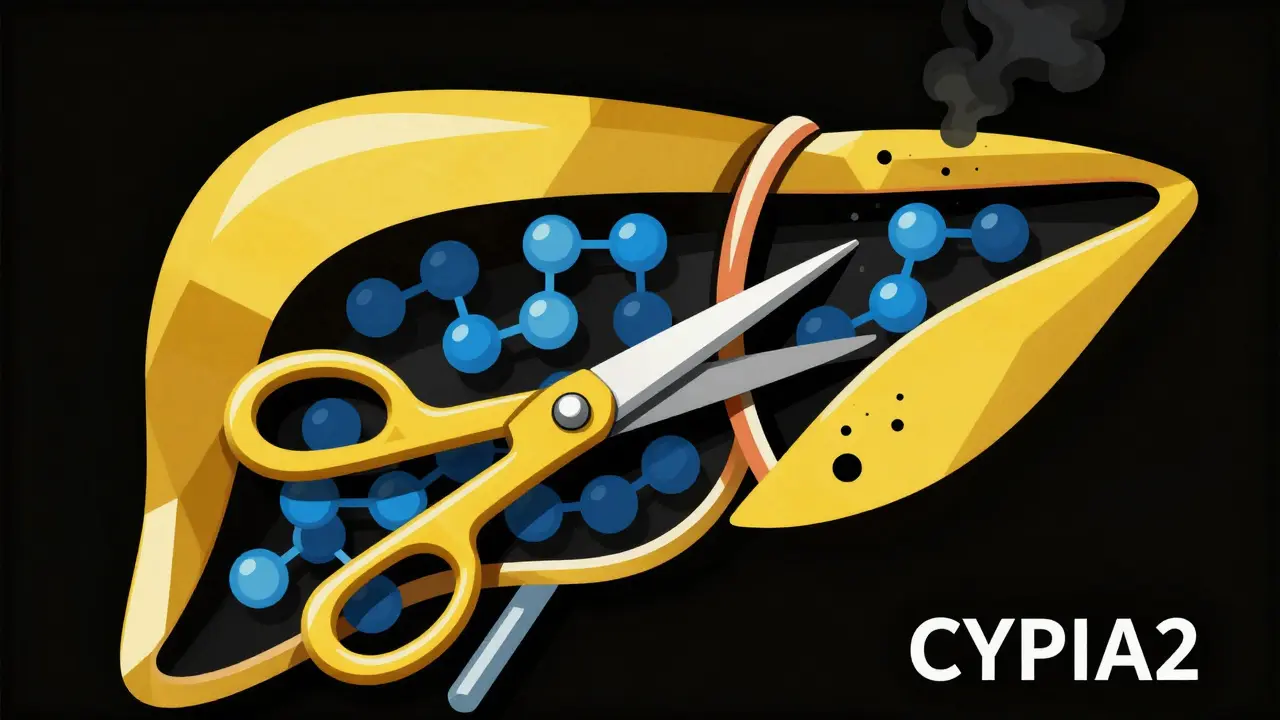
To understand why this happens, we need to look at the liver. Your liver is the factory that processes medications. Inside the liver cells, there are specific workers called enzymes. For Clozapine, the main worker is CYP1A2. Think of CYP1A2 as a pair of scissors cutting the Clozapine molecule into smaller pieces so your body can get rid of it.
Normally, these scissors work at a steady pace. But tobacco smoke contains chemicals called polycyclic aromatic hydrocarbons. When these chemicals enter your bloodstream, they act like a whistle blowing at the factory. They bind to a receptor in your cells called the Aryl Hydrocarbon Receptor (AhR). This signals the cell to make more CYP1A2 scissors.
Research from the Institute of Pharmacology, Polish Academy of Sciences, confirms that while other enzymes like CYP3A4 play a role, CYP1A2 is the dominant force here. It handles 60-70% of Clozapine clearance. When you smoke, you aren't just inhaling nicotine; you are chemically altering your liver's capacity to metabolize your medication. This induction effect kicks in within 48 to 72 hours of starting to smoke regularly. It doesn't take long for your drug levels to crash.
This mechanism explains why a dose that worked perfectly for months can suddenly fail. It isn't that the schizophrenia is getting worse; it's that the chemical environment in your body has changed. The drug is being cleared out before it can do its job.
The Numbers Behind the Interaction
How big is the drop? It is substantial. Clinical studies show that smoking reduces Clozapine concentration by an average of 30%. However, individual variations are wide. In some heavy smokers, levels can drop by up to 50%.
Consider a patient taking 300mg of Clozapine daily. Their blood level might sit comfortably at 400 ng/mL, which is within the therapeutic range. If they start smoking a pack a day, that level could drop to 150-200 ng/mL. That is subtherapeutic. The medication is effectively gone from your system in terms of efficacy.
To compensate, smokers often need 40-60% higher doses than non-smokers. A non-smoker might need 300mg to feel stable, while a smoker might need 500mg or more to achieve the same blood concentration. This isn't just about comfort; it's about preventing relapse. Treatment-resistant schizophrenia is serious. Losing the therapeutic effect of Clozapine can lead to a return of severe symptoms.
| Smoking Status | Typical CYP1A2 Activity | Plasma Level Change | Dose Adjustment Needed |
|---|---|---|---|
| Non-Smoker | Baseline | 100% (Reference) | Standard Dose |
| Light Smoker | Moderate Induction | -20% to -30% | 10-20% Increase |
| Heavy Smoker | High Induction | -30% to -50% | 40-60% Increase |
| Recent Quitter | Declining Induction | +30% to +50% (Rise) | 30-50% Decrease |
These numbers are not static. They depend on how much you smoke and your genetic makeup. Some people have a specific gene variant, CYP1A2 *1F/*1F, which makes them even more sensitive to the inducing effects of smoke. For them, the drop in medication levels can be even more dramatic.
Clinical Consequences of Ignoring the Interaction
What happens if you ignore these changes? The risks go both ways. If you start smoking and don't increase your dose, you face the risk of relapse. You might feel your symptoms creeping back. You could become agitated, paranoid, or lose touch with reality again. This is often misdiagnosed as the medication "not working" when it is actually being metabolized too fast.
The other side is more dangerous. If you quit smoking but keep taking the same high dose, the drug builds up. Because your liver is no longer making extra enzymes to clear it, the Clozapine accumulates. This can lead to toxicity. Symptoms include severe sedation, confusion, rapid heart rate (tachycardia), and dangerously low blood pressure.
The most severe risk is seizures. Clozapine lowers the seizure threshold, and high blood levels increase this risk significantly. There is also the risk of myocarditis, inflammation of the heart muscle, which can be fatal. A case study from 2022 documented a 45-year-old woman who developed toxic levels (850 ng/mL) after quitting smoking. She required a dose reduction from 400mg to 250mg to stabilize.
This is why the FDA includes a specific warning about this interaction in the prescribing information. It is a safety issue, not just a dosing nuance. The European Medicines Agency also classifies this as clinically significant. It requires active management.
Managing the Interaction: Protocols and Monitoring
So, how do you handle this safely? The key is Therapeutic Drug Monitoring, often called TDM. This involves checking the amount of Clozapine in your blood regularly. It is the only way to know for sure if your dose is correct.
Clinicians should check baseline levels before making any changes. The American Psychiatric Association recommends checking levels 4-7 days after any dose change. If a patient starts smoking, the dose typically needs to go up by 40-60%. If a patient quits, the dose needs to come down by 30-50%.
Here is a practical workflow for managing this transition:
- Establish Baseline: Check Clozapine levels when the patient is stable and their smoking status is known.
- Monitor Changes: Ask about smoking habits at every visit. 68% of psychiatrists report checking this routinely.
- Adjust Dose: If smoking starts, increase dose gradually. If quitting, reduce dose immediately or in steps.
- Recheck Levels: Wait 1 week after the change to measure new levels. Do not guess.
- Watch for Symptoms: Look for signs of relapse (if smoking starts) or toxicity (if smoking stops).
Electronic health record systems like Epic now include alerts for this. A 2023 study showed these alerts reduced adverse events by 37%. If you are a patient, make sure your doctor knows if you light up or if you are trying to quit. Don't hide it. It is vital for your safety.
Vaping and Alternative Antipsychotics
What about e-cigarettes? Many people think vaping avoids the chemical interaction because there is no tobacco combustion. Recent research challenges this. A 2024 study in Nature Communications found that e-cigarettes still produce CYP1A2 induction effects. They might be 15-20% less pronounced than traditional cigarettes, but they still affect the enzyme. So, switching to vaping does not eliminate the need for monitoring.
Are there other medications that don't have this problem? Yes. Olanzapine is also metabolized by CYP1A2 but is less sensitive to smoke. Risperidone is primarily metabolized by CYP2D6 and shows minimal interaction with tobacco. Quetiapine and Aripiprazole rely on CYP3A4 and CYP2D6, avoiding this specific smoke interaction.
However, Clozapine remains the only FDA-approved medication for treatment-resistant schizophrenia. If you have tried other drugs and they failed, Clozapine is often the only option. This makes managing the tobacco interaction non-negotiable. You cannot simply switch drugs easily. You must manage the interaction.
Genetic Factors and Future Directions
Genetics play a surprisingly large role. As mentioned, the CYP1A2 *1F/*1F genotype makes some people super-sensitized to smoke. Pharmacogenomic testing is becoming more common. In 2023, 47% of US academic medical centers offered this testing, up from 15% in 2018. While not routine for everyone yet, knowing your genotype could help predict how much your dose needs to change.
Looking ahead, researchers are working on new formulations. A 2024 clinical trial is testing a sustained-release Clozapine designed to minimize these fluctuations. Preliminary results show 40% reduced variability in plasma levels among smokers. This could be a game-changer for the 300,000 patients in the US on Clozapine therapy.
Until then, the rule remains the same: Smoke changes the math. Your body processes the drug differently. You must adjust the dose to keep the balance. Ignoring the smoke is ignoring a major variable in your treatment equation.
How long does it take for smoking to affect Clozapine levels?
The induction effect typically develops within 48 to 72 hours of regular smoking initiation. You do not need to smoke for weeks to see a change in your blood levels.
What happens if I quit smoking while on Clozapine?
If you quit smoking, your enzyme activity slows down, and Clozapine levels can rise by 30-50%. This increases the risk of toxicity, seizures, and heart issues. Your doctor must reduce your dose, usually by 30-50%, within a week of quitting.
Do e-cigarettes affect Clozapine levels?
Yes. Research indicates that e-cigarettes still induce the CYP1A2 enzyme, though potentially 15-20% less than traditional cigarettes. You should still monitor your levels if you switch to vaping.
How much should the dose increase if I start smoking?
Smokers often require 40-60% higher doses than non-smokers to achieve the same therapeutic effect. A dose of 300mg might need to increase to 450-500mg, but this must be guided by blood level testing.
Can genetics change how I react to tobacco and Clozapine?
Yes. Patients with the CYP1A2 *1F/*1F genotype have heightened sensitivity to tobacco smoke induction. This can lead to more drastic drops in medication levels compared to other patients.
Next Steps and Troubleshooting
If you are a patient or a caregiver, here is what you need to do now. First, be honest with your doctor about your smoking habits. Do not hide the fact that you smoke or that you are trying to quit. Second, ask for blood level monitoring. If you change your smoking status, request a blood test within one week. Third, watch for symptoms. If you feel more sedated after quitting, tell your doctor. If you feel your symptoms returning after starting to smoke, tell your doctor.
For clinicians, ensure your electronic health records trigger alerts when smoking status is updated. Use therapeutic drug monitoring as a standard of care for all Clozapine patients. Educate your patients about this interaction before they start the medication. Prevention is easier than managing a crisis caused by toxicity or relapse.
The goal is stability. Clozapine is a powerful tool, but it requires precision. Tobacco smoke is a variable that disrupts that precision. By understanding the CYP1A2 mechanism and respecting the data, you can keep the treatment on track.
Agbogla Bischof
March 26, 2026 AT 02:46This is vital. Indeed. The enzyme activity changes. It is clear.
We must act. Now. Safety comes first. Always.
Do not ignore. The data. It speaks.
Check levels. Regularly. Please.
Stephen Alabi
March 26, 2026 AT 14:10One must consider that individual variability often exceeds the general statistics presented here.
The clinical guidelines are not absolute laws but rather recommendations.
There is a significant portion of the population where the induction is negligible.
We should avoid alarmism in our discourse regarding pharmacokinetics.
The data suggests a more nuanced approach is required for every case.
Blessing Ogboso
March 27, 2026 AT 04:33It is truly remarkable how the body reacts to external substances. We often forget the intricate balance required for mental stability. The liver works tirelessly to process everything we consume. Smoking introduces chemicals that disrupt this delicate machinery. Patients must understand the gravity of these metabolic shifts. Ignoring the warning signs can lead to severe consequences. We see too many cases where communication breaks down. Doctors need to know the full truth about lifestyle habits. Hiding the smoking habit is a dangerous game to play. The risk of seizures is not something to take lightly. Heart inflammation is a terrifying possibility for some individuals. Genetic factors add another layer of complexity to the treatment. Everyone processes medication differently based on their DNA. Monitoring blood levels provides the necessary clarity for adjustments. We must support each other in maintaining honest medical histories.
Kevin Y.
March 28, 2026 AT 12:28This information is incredibly valuable for our community members.
It is essential that we prioritize safety above all else.
Thank you for bringing this critical interaction to light.
We should all encourage open dialogue with medical professionals.
Raphael Schwartz
March 30, 2026 AT 06:23smokin kills anyway so dose dont matter much
Katie Putbrese
March 31, 2026 AT 17:53People need to stop being so careless with their health.
Ignoring the doctor is selfish and dangerous.
You put yourself at risk when you hide things.
Responsibility is key to surviving this treatment.
peter vencken
April 1, 2026 AT 04:46i had a friend who stopped smoking and got really sick from the meds.
the doctor had to cut the dose fast.
its wild how the body changes so quick.
people need to tell their dr if they light up.
Marissa Staples
April 2, 2026 AT 21:29That sounds really scary honestly.
I hope everyone stays safe with their meds.
It is good to know about the enzyme stuff.
Caroline Dennis
April 4, 2026 AT 05:18CYP1A2 polymorphism dictates the induction magnitude significantly.
Pharmacogenomic profiling remains the gold standard for precision dosing.
Therapeutic window narrowing is a critical risk factor.
Metabolic clearance rates must be recalibrated upon cessation.
Jefferson Moratin
April 5, 2026 AT 19:06The intersection of biological determinism and personal choice is evident here.
We are bound by our chemistry yet free in our actions.
Understanding the mechanism empowers the individual to make informed decisions.
It is a profound responsibility to manage one's own pharmacology.
Chris Crosson
April 6, 2026 AT 14:10This is exactly the kind of info that prevents hospital visits.
Everyone needs to read this carefully.
Stay on top of your blood work.
Kevin Siewe
April 8, 2026 AT 09:42I appreciate the focus on safety protocols here.
It is good to see clear guidelines for patients.
Monitoring is the best path forward.