
 May, 11 2026
When you take a common painkiller or an antibiotic, there is a very high chance that the active ingredient inside came from China. As of 2023, Chinese manufacturers supplied approximately 80% of the global active pharmaceutical ingredient (API) market. This dominance is not accidental; it is the result of two decades of state-backed industrial policy following China's accession to the World Trade Organization in 2001. However, this massive scale comes with a complex trade-off. While costs are significantly lower, questions about quality consistency, data integrity, and regulatory oversight remain central to global healthcare discussions.
The situation creates a paradox for the global pharmaceutical industry. On one hand, the world relies on China for the building blocks of medicine. On the other hand, regulatory bodies like the U.S. Food and Drug Administration (FDA) and the European Medicines Agency (EMA) continue to flag significant compliance issues. Understanding this dynamic requires looking beyond simple cost comparisons to examine the technical realities of chemical synthesis, the evolution of Chinese regulations, and the strategic moves being made by Western governments to diversify supply chains.
The Economics of API Dominance
To understand why China holds such a commanding position, we must look at the economics of Active Pharmaceutical Ingredients (APIs), the biologically active components responsible for therapeutic effects in drugs. Producing APIs involves multi-step chemical synthesis, often requiring hazardous materials and strict environmental controls. Chinese manufacturers have achieved production costs 30-40% lower than their Western counterparts.
This cost advantage stems from vertical integration. Leading producers like Sinopharm and Shijiazhuang Pharma Group operate plants capable of producing 500-2,000 metric tons of specific APIs annually. These facilities leverage China’s integrated chemical supply chain, providing ready access to Key Starting Materials (KSMs) and intermediates. By controlling 60-70% of the production chain internally, they minimize logistical bottlenecks and material costs.
However, this efficiency has created a dependency that experts warn is risky. Dr. Andrew von Eschenbach, former FDA Commissioner, noted that China’s dominance in KSMs creates a single point of failure for 90% of essential medicines. When prices for Chinese APIs average $50-150 per kilogram compared to $200-400 for Western-produced equivalents, procurement managers face difficult choices between budget constraints and supply security.
Quality Control and Regulatory Gaps
The primary concern regarding Chinese generic production is not just price, but consistency. The FDA inspection database reveals specific deficiencies in Chinese facilities. Between 2022 and 2023, inadequate laboratory controls were cited in 78% of inspections, while insufficient validation of manufacturing processes appeared in 65% of cases. Data integrity issues were found in 52% of these inspections.
These figures highlight a systemic challenge. A 2023 study found that 12.7% of Chinese API samples failed purity tests, compared to 2.3% for European APIs and 1.8% for U.S. APIs. For context, this means that for every 100 batches tested, more than one from China did not meet specifications, whereas fewer than three from Europe or the U.S. failed. In the pharmaceutical industry, where precision is life-or-death, this gap is significant.
Industry professionals report real-world consequences. A survey by the Pharmaceutical Research and Manufacturers of America (PhRMA) showed that 68% of U.S. generic drug manufacturers experienced API quality issues when sourcing from China. Common complaints included inconsistent purity levels and documentation falsification. One notable case involved Zydus Pharmaceuticals recalling 1.2 million bottles of blood pressure medication in 2023 due to sub-potent API sourced from Huahai Pharmaceutical.
| Metric | China | Europe | United States |
|---|---|---|---|
| Average API Price (per kg) | $50 - $150 | $200 - $400 | $200 - $400 |
| Purity Test Failure Rate | 12.7% | 2.3% | 1.8% |
| FDA Citation: Lab Controls | 78% of inspections | N/A | N/A |
| Continuous Manufacturing Adoption | 35% | High | High |

Regulatory Evolution: The GCE Program
Recognizing these challenges, China’s National Medical Products Administration (NMPA) implemented the Generic Consistency Evaluation (GCE) program launched in 2016 to require Chinese generics to demonstrate bioequivalence to reference products. This initiative aimed to align domestic standards with international expectations. The goal was clear: eliminate non-compliant manufacturers and improve the reputation of Chinese-made drugs.
The impact has been substantial but incomplete. Since 2018, the program has eliminated 4,500 non-compliant manufacturers, reducing the total number of generic drug facilities in China from 7,000 to 2,500. Dr. Liangping Liu, Director of China’s National Institute for Food and Drug Control, stated that China has closed 80% of non-compliant facilities since 2015. Furthermore, 95% of GMP-certified plants now implement ICH Q7 guidelines.
Despite these efforts, progress remains uneven. As of 2024, only 35% of approved generic drugs in China have completed the GCE evaluation process. This lag suggests that while the regulatory framework exists, implementation across thousands of smaller firms is still catching up. Additionally, China continues to rely on outdated batch processing methods for 65% of its production, whereas U.S. and European facilities have adopted continuous manufacturing at much higher rates.
Supply Chain Vulnerabilities and Geopolitics
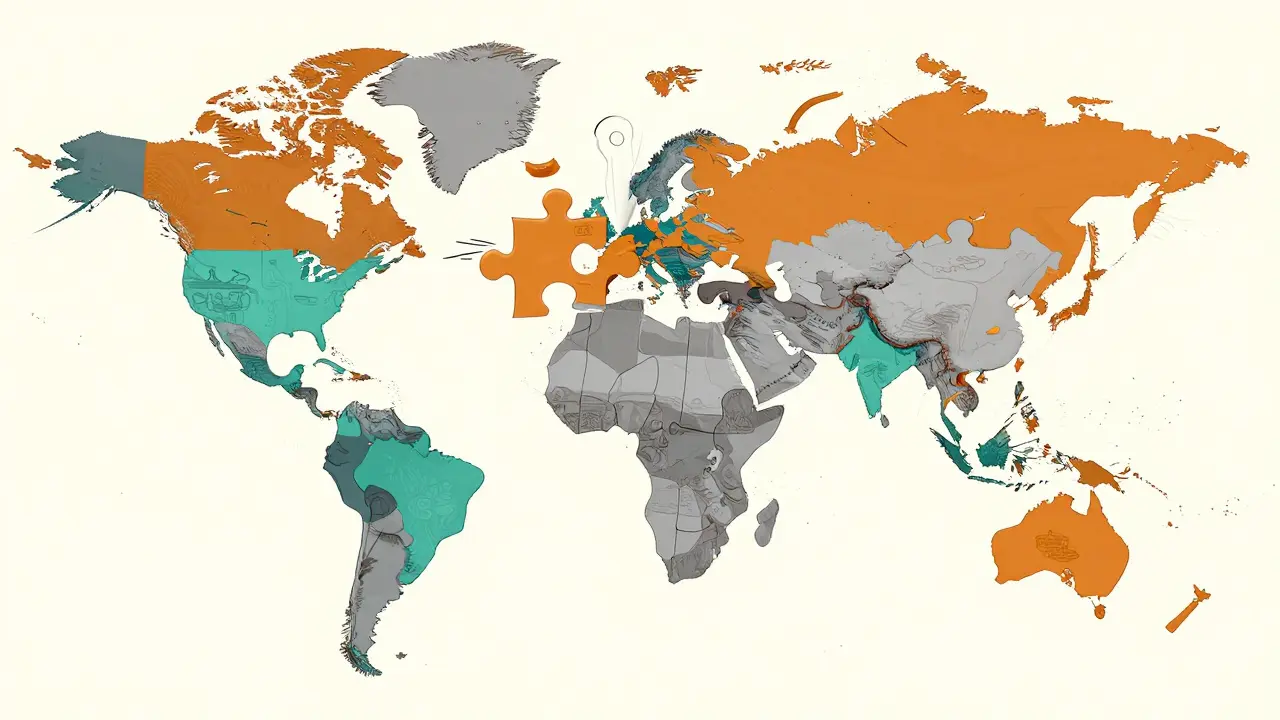
The reliance on Chinese APIs has become a geopolitical issue. The U.S. CHIPS and Science Act allocated $500 million for domestic API production, signaling a shift toward reshoring critical medical supplies. Similarly, the European Union’s 2024 Pharmaceutical Strategy aims to reduce API dependency on China from 80% to 40% by 2030.
Trade disruptions pose immediate risks. A 2024 analysis by Neurology Advisor warned that sudden trade interruptions could leave American patients at risk due to the lack of alternative short-term suppliers. India, which controls 20% of the global generic finished dosage market, imports 65% of its APIs from China. This creates a layered dependency where even non-Chinese finished goods may contain Chinese raw materials.
McKinsey forecasts that China’s API market share will drop from 78% in 2023 to 65% by 2030 as countries like India, Vietnam, and Mexico expand capacity. However, maintaining current dominance requires massive investment. Deloitte’s 2024 analysis concluded that China needs $30-40 billion in quality infrastructure investment to achieve 95%+ regulatory compliance rates across major markets within five years.
Challenges for Multinational Companies
For Western pharmaceutical companies operating in China, navigating the regulatory landscape is complex. The NMPA requires domestic Marketing Authorization Holders (MAHs) to manufacture exclusively within China, creating barriers for multinationals. Establishing an FDA-compliant API facility in China costs $85-120 million, compared to $50-75 million for non-compliant plants.
Cultural and procedural differences also play a role. A 2023 PwC survey found that 63% of companies cited cultural differences in quality documentation as a major challenge. Another 71% reported inconsistent raw material quality. Successful implementations, such as Pfizer’s joint venture with Zhejiang Huahai Pharmaceutical, required 36 months of process harmonization and $22 million in quality system upgrades before achieving FDA approval for U.S. market supply.
These examples illustrate that while collaboration is possible, it demands significant time, capital, and patience. Companies must adapt to China’s GMP standards, which differ from FDA and EMA requirements in 17 key areas, including environmental monitoring frequency and data retention periods.
Future Outlook: Pharma 2035
China is actively working to address these concerns through its "Pharma 2035" initiative, which allocates $22 billion to upgrade manufacturing technology and quality systems. Specific targets include increasing FDA-inspected facilities from 187 in 2023 to 500 by 2027. The NMPA also mandates electronic common technical document (eCTD) submissions for all new API applications and requires continuous manufacturing for 30% of high-volume products by 2026.
These steps indicate a recognition that volume alone is no longer sufficient. To maintain market share, Chinese manufacturers must prove reliability and safety. Whether they can close the quality gap quickly enough to satisfy Western regulators remains the critical question for the next decade.
Why does China dominate the global API market?
China dominates the API market due to vertical integration, lower labor and environmental compliance costs, and state-supported industrial policies since joining the WTO in 2001. Chinese manufacturers produce APIs at 30-40% lower costs than Western competitors by controlling 60-70% of the production chain internally.
What are the main quality concerns with Chinese generic drugs?
Main concerns include inconsistent purity levels, data integrity issues, and inadequate laboratory controls. FDA inspections cite lab control failures in 78% of cases. A 2023 study showed 12.7% of Chinese API samples failed purity tests, compared to 2.3% for European APIs.
What is the Generic Consistency Evaluation (GCE) program?
The GCE program, launched by China's NMPA in 2016, requires generic drugs to demonstrate bioequivalence to reference products. It has eliminated 4,500 non-compliant manufacturers since 2018, though only 35% of approved generics had completed evaluation by 2024.
How do Western governments plan to reduce dependency on Chinese APIs?
The U.S. allocated $500 million via the CHIPS and Science Act for domestic API production. The EU aims to reduce API dependency on China from 80% to 40% by 2030 through its 2024 Pharmaceutical Strategy, encouraging diversification to countries like India, Vietnam, and Mexico.
Is it safe to buy generic drugs manufactured in China?
Drugs approved by stringent regulatory agencies like the FDA or EMA undergo rigorous testing regardless of origin. However, supply chain transparency and consistent quality control remain ongoing challenges. Consumers should ensure medications are purchased from licensed pharmacies that verify regulatory approvals.