
 Dec, 30 2025
Autoimmune hepatitis isn’t caused by a virus, alcohol, or fatty foods. It’s your own immune system turning against your liver. That’s the core problem. Instead of fighting off germs, your body’s defense system starts attacking healthy liver cells. The result? Chronic inflammation. Left unchecked, this leads to scarring, liver failure, and even death. But here’s the good news: if caught early, most people can live normal, long lives with the right treatment.
What Exactly Happens in Your Liver?
Your liver does over 500 jobs - filtering toxins, making proteins, storing energy. In autoimmune hepatitis, immune cells mistake liver cells for invaders. They flood the liver with inflammatory signals, causing damage at the cellular level. This isn’t sudden. It creeps in. Some people feel fine for years. Others suddenly get very sick.
The damage shows up in specific patterns under the microscope. Pathologists look for interface hepatitis - where immune cells eat away at the edge of liver tissue. They see lymphocytes and plasma cells clustering like a crowd at a protest. Rosettes - liver cells arranged in circles - form as the tissue tries to heal itself. Over time, fibrosis builds. If it reaches stage F4, you have cirrhosis. That’s when the liver turns hard and nodular, losing function.
Two Types, One Problem
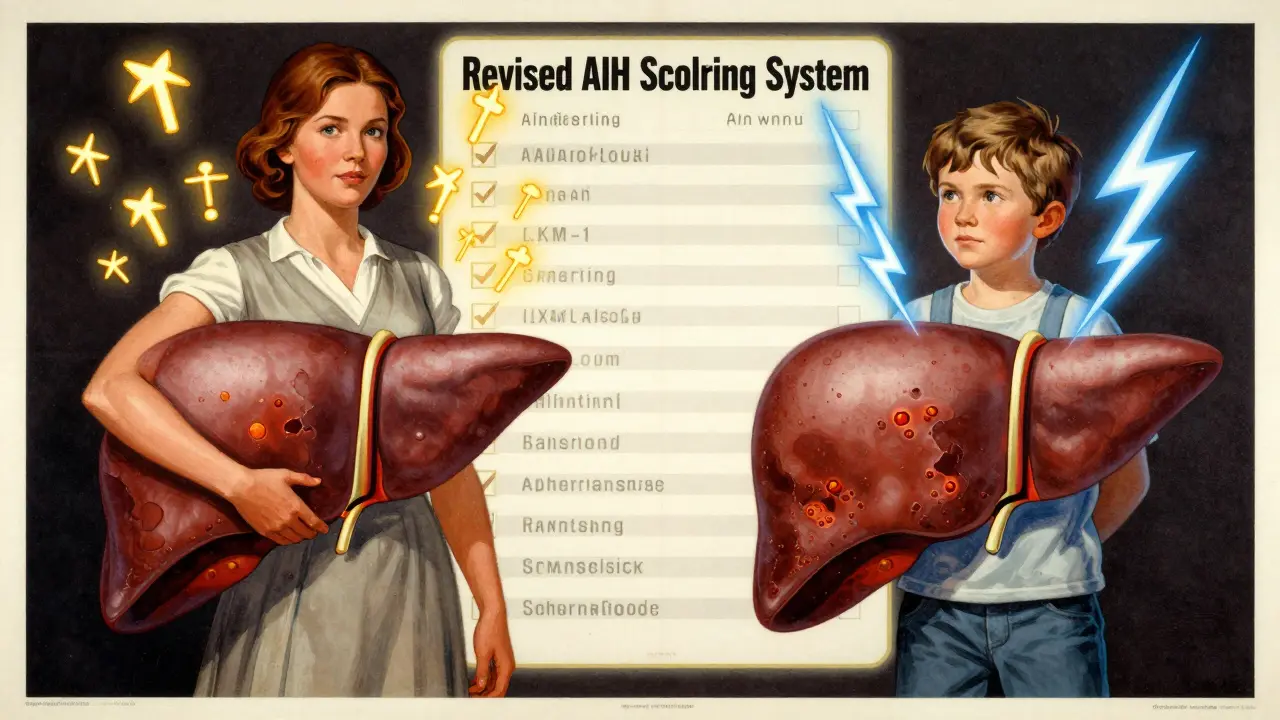
There are two main types of autoimmune hepatitis. Type 1 is the most common - 80 to 90% of cases in the U.S. and Europe. It hits mostly women between 15 and 40. About 80% of these patients test positive for antinuclear antibodies (ANA) or anti-smooth muscle antibodies (ASMA). Type 2 is rarer. It mostly affects children between 2 and 14. These kids often have anti-LKM-1 or anti-LC-1 antibodies. The treatment is similar, but the age group and antibody markers are different.
Why does this matter? Because the type helps confirm the diagnosis. A 12-year-old with high LKM-1 antibodies and elevated liver enzymes? That’s likely type 2. A 35-year-old woman with ANA and no viral hepatitis? That’s probably type 1. Getting the type right helps rule out other diseases.
How Do Doctors Know It’s Not Just Viral Hepatitis?
People often confuse autoimmune hepatitis with hepatitis B or C. But the causes are completely different. Viral hepatitis comes from an infection. Autoimmune hepatitis comes from a misfire in your immune system. That means treatment is the opposite. You don’t need antivirals. You need immunosuppressants.
Doctors also rule out other autoimmune liver diseases. Primary biliary cholangitis (PBC) and primary sclerosing cholangitis (PSC) attack bile ducts, not liver cells. Autoimmune hepatitis targets hepatocytes - the main working cells of the liver. Blood tests help tell them apart. PBC often shows high alkaline phosphatase and AMA antibodies. AIH shows high ALT, AST, and IgG.
Another tricky mimic is drug-induced liver injury (DILI). About 15 to 20% of AIH cases are misdiagnosed as DILI at first. That’s why doctors dig deep. They ask about every medication, supplement, and herb you’ve taken. They check for recent infections. They look for antibodies. They may even do a liver biopsy. The Revised International AIH Group Scoring System, updated in 2022, gives doctors a checklist with 92% sensitivity and 97% specificity. It’s the gold standard.
What Do the Blood Tests Show?
There’s no single test that confirms autoimmune hepatitis. It’s a puzzle. Blood work pieces it together:
- ALT and AST: Usually 5 to 10 times higher than normal. These enzymes leak out when liver cells die.
- IgG: Always elevated. Often more than 1.5 times the upper limit. This is a key marker of immune system overactivity.
- Bilirubin: Rises in advanced cases. Causes jaundice - yellow skin and eyes.
- ANA, ASMA, LKM-1, LC-1: Antibodies that point to the type of AIH.
Normal liver enzymes? That doesn’t rule out AIH. Some people have normal ALT but high IgG and antibodies. That’s why doctors don’t rely on one number. They look at the whole picture.
How Is It Treated? The Standard Approach
Treatment starts with two drugs: prednisone and azathioprine. Prednisone is a steroid that shuts down the immune attack fast. Azathioprine is a long-term immunosuppressant that helps reduce steroid doses and keeps the disease quiet.
Typical starting dose: 0.5 to 1 mg of prednisone per kilogram of body weight - up to 60 mg daily. Azathioprine starts at 50 mg a day. Within 3 to 6 months, most patients see their ALT and AST drop. The goal? Normal levels for at least two years. That’s remission.
Studies show 65 to 80% of patients reach remission with this combo. The 10-year survival rate jumps from 10% without treatment to 94% with it. That’s not a small difference. It’s life-changing.
But steroids come with baggage. Weight gain. Mood swings. Insomnia. Bone loss. A 2023 patient survey found 82% of those on prednisone gained weight. 67% had trouble sleeping. 58% felt anxious or depressed. That’s why doctors try to taper prednisone as soon as possible. Azathioprine takes over the long-term job.
What If the First Treatment Doesn’t Work?
Not everyone responds. About 10% of patients are treatment-refractory. Their enzymes stay high. Their symptoms don’t improve. For them, doctors switch to second-line drugs.
Mycophenolate mofetil (CellCept) is the most common alternative. It works in 70 to 80% of patients who can’t tolerate azathioprine. It’s often used when people get pancreatitis or low white blood cells from azathioprine. Other options include cyclosporine, tacrolimus, or rituximab - though these are still being studied.
In 2022, the European Medicines Agency gave orphan drug status to obeticholic acid for AIH. Early trials showed 45% of patients reached complete remission in 24 weeks - almost double the placebo rate. It’s not approved yet, but it’s a sign that new options are coming.
When Is a Liver Transplant Needed?
Most people never need a transplant. But for the 5 to 10% who progress to end-stage liver disease despite treatment, it’s the only option. Autoimmune hepatitis is the fourth most common reason for adult liver transplants in the U.S., making up 6.2% of all cases.
Transplant success is high - over 85% survive five years. But the disease can come back. In about 20 to 30% of cases, AIH reappears in the new liver. That’s why transplant patients still need immunosuppressants - and close monitoring.
What Does Daily Life Look Like After Diagnosis?
Living with autoimmune hepatitis isn’t easy. Fatigue is the #1 complaint. In a 2022 survey of over 1,000 patients, 78% said they were constantly tired. Joint pain affected 63%. Many can’t work full-time. Anxiety about relapse is common - 71% reported it.
But many live full lives. Sarah K., a patient from Ohio, wrote on CaringBridge in 2023: “My ALT dropped from 480 to 32 in six weeks. I started hiking again. I went back to teaching.” She’s now in remission after 18 months of treatment.
Success depends on three things: taking meds exactly as prescribed, getting blood tests every 2 to 4 weeks during the first few months, and protecting your bones. Steroids weaken bone density. Doctors recommend 1,200 mg of calcium and 800 IU of vitamin D daily. Weight-bearing exercise helps too.
What’s on the Horizon?
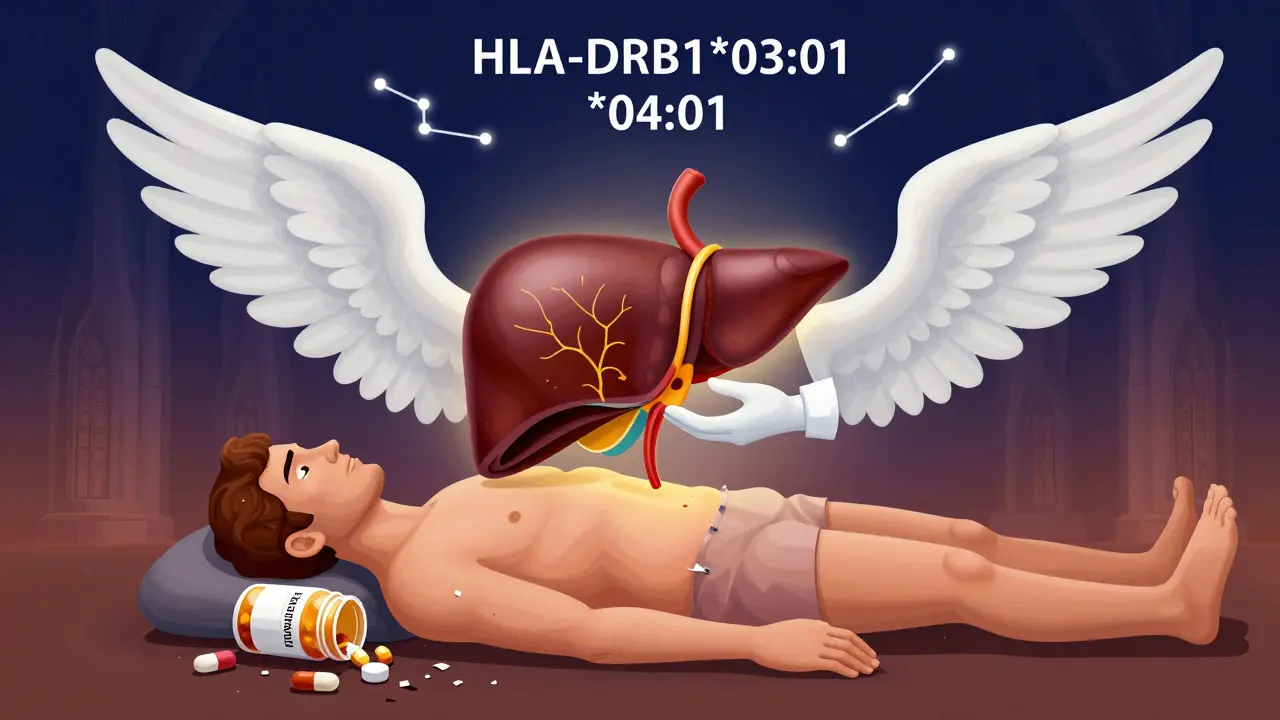
The future of AIH treatment is personalized. Researchers have found that certain genetic markers - HLA-DRB1*03:01 and *04:01 - predict who responds best to which drug. People with *03:01 tend to relapse if steroids are stopped too soon. Those with *04:01 respond better to azathioprine.
By 2030, doctors may use genetic testing to pick the right drug from day one. That could boost remission rates to 85-90% and cut side effects. Clinical trials are testing biologics like vedolizumab and rituximab. These target specific immune cells, not the whole system. Less blanket suppression. Fewer infections.
The global AIH treatment market is growing fast - from $1.27 billion in 2022 to an expected $2.04 billion by 2028. That’s because more people are being diagnosed. Better tests. More awareness. And patients demanding better options.
What Should You Do If You Suspect AIH?
If you have unexplained fatigue, joint pain, dark urine, or jaundice - and no history of alcohol use or viral exposure - talk to your doctor. Ask for liver enzymes, IgG, and antibody tests. Don’t wait. Early treatment changes everything.
Don’t assume it’s just stress or aging. Autoimmune hepatitis doesn’t care how old you are or how healthy you seem. It’s silent until it’s not.
And if you’re already diagnosed? Stick with your plan. Take your meds. Get your labs. Protect your bones. You’re not just managing a disease. You’re protecting your future liver - and your future self.
Can autoimmune hepatitis be cured?
Autoimmune hepatitis can’t be cured in the traditional sense, but it can be controlled. With proper treatment, most patients achieve remission - meaning liver enzymes and IgG return to normal and stay there. Many stay in remission for years, even decades. Some can eventually stop medication, but about 25% need low-dose therapy for life. The goal isn’t a cure - it’s long-term control.
Is autoimmune hepatitis hereditary?
It’s not directly inherited like cystic fibrosis, but genetics play a role. People with certain HLA genes - especially HLA-DRB1*03:01 and *04:01 - are more likely to develop it. If a close relative has AIH or another autoimmune disease (like type 1 diabetes or rheumatoid arthritis), your risk is higher. But having the gene doesn’t mean you’ll get the disease. Something in the environment - like a virus or medication - likely triggers it in susceptible people.
Can you drink alcohol with autoimmune hepatitis?
No. Alcohol adds extra stress to an already damaged liver. Even small amounts can speed up scarring and increase the risk of cirrhosis. Doctors strongly recommend complete abstinence. If you’re in remission, that doesn’t change. Your liver is still vulnerable. Alcohol doesn’t cause AIH, but it makes it worse.
Do you need a special diet for autoimmune hepatitis?
There’s no AIH-specific diet, but a liver-friendly one helps. Avoid processed foods, excess sugar, and saturated fats. Eat plenty of vegetables, lean proteins, and whole grains. If you’re on steroids, watch your sodium to reduce bloating and high blood pressure. Calcium and vitamin D are essential to protect your bones. If you have advanced liver disease or cirrhosis, your doctor may recommend limiting protein or salt. Always check with your hepatologist before making big changes.
Can autoimmune hepatitis come back after a liver transplant?
Yes. In 20 to 30% of cases, autoimmune hepatitis returns in the new liver. That’s why transplant patients still take immunosuppressants - often for life. Regular blood tests and liver biopsies help catch early signs of recurrence. The good news? Most recurrences are mild and respond well to treatment adjustments. It doesn’t mean the transplant failed. It just means the immune system still has a tendency to attack liver tissue.
How often do you need blood tests?
During the first 6 months of treatment, you’ll need blood tests every 2 to 4 weeks to check liver enzymes, IgG, and blood cell counts. Once you’re stable, tests can drop to every 3 months. After two years of remission, some patients go to every 6 months. If you’re on steroids, you’ll also need monitoring for blood sugar, bone density, and eye health. Skipping tests is risky - relapse often happens without symptoms.
Jenny Salmingo
December 30, 2025 AT 15:20Just found out my sister has this. I didn’t even know it was a thing. Thank you for explaining it so clearly. She’s on prednisone and is already feeling less tired. I’m so glad there’s hope.
She’s scared to tell her boss, but I told her she deserves to be supported. You’re not weak for needing help.
Love this post. Really made me feel less alone.
Aaron Bales
December 30, 2025 AT 15:22ALT/AST 5-10x normal + elevated IgG = AIH until proven otherwise. Rule out viral, drug-induced, PBC, PSC. Biopsy confirms. Standard of care: prednisone + azathioprine. 94% 10-year survival with treatment. No magic, just science.
Sara Stinnett
December 31, 2025 AT 07:40Oh, so now we’re just supposed to believe that our immune systems are ‘misfiring’ like a glitchy smartphone? Fascinating. Where’s the peer-reviewed proof that it’s not just glyphosate, 5G, or the government’s secret vaccine agenda?
And why are we being sold steroids like they’re candy? No wonder people are depressed - you’re poisoning them with synthetic cortisol and calling it ‘treatment.’
Meanwhile, the real cure - fasting, turmeric, and grounding your bare feet on the Earth - is buried under $2 billion in pharma profits. Wake up, sheeple.
linda permata sari
January 1, 2026 AT 17:00OMG I JUST READ THIS AND I CRIED. My mom had this. She was 42. She lost all her hair from the steroids. She couldn’t walk up the stairs. But she didn’t give up.
She started walking every morning. Even when it rained. Even when she was exhausted.
Now she’s 68. She gardens. She bakes. She dances with her grandkids.
This post gave me chills. Thank you for writing this. She would’ve loved it.
Brandon Boyd
January 2, 2026 AT 21:41Hey, if you’re reading this and you’ve been diagnosed - you’re not broken. You’re not failing. You’re fighting something invisible, and that takes insane strength.
Some days you’ll feel like trash. That’s okay. Rest. Cry. Eat that ice cream.
But then? Get up. Take your pill. Go for a walk. Text someone who gets it.
You’re not alone. I’ve been there. And I’m still here. So are you.
Branden Temew
January 4, 2026 AT 12:26So let me get this straight - our bodies are so incompetent they attack our own organs, and the solution is to suppress the entire immune system with toxic chemicals?
How is this not the ultimate admission that modern medicine doesn’t understand biology? We don’t fix the system. We just blast it with steroids and call it a day.
Meanwhile, the real question - why is this happening so much now? - gets buried under drug trials and market projections.
Maybe we’re asking the wrong questions.
Paul Huppert
January 6, 2026 AT 10:44Thanks for the detailed breakdown. I had a friend diagnosed last year - she was misdiagnosed with DILI for 8 months. It’s wild how often it gets missed.
Just wanted to say - the part about bone health? Super important. She started taking calcium and vitamin D and her doctor said her density improved in 6 months.
Small things matter.
Hanna Spittel
January 7, 2026 AT 12:48ALERT: Prednisone = weight gain + mood swings + insomnia 😱
Also, why is everyone so chill about the fact that we’re basically turning people into zombies with drugs that make them crave donuts? 🍩
Someone’s making bank. Not me. Not you. Definitely not the liver.
John Chapman
January 9, 2026 AT 04:47THIS. RIGHT HERE. This is the kind of post that saves lives.
I was almost misdiagnosed. I had the fatigue, the joint pain - thought it was just ‘aging.’ Then I read this and demanded the antibody tests.
Turns out I had Type 1. Started treatment. Now I’m in remission.
To anyone reading this: Don’t wait. Ask for the tests. You owe yourself that.
Robb Rice
January 9, 2026 AT 17:00While the clinical information presented is largely accurate, I must note a typographical inconsistency in the section on antibody markers: 'anti-LKM-1 or anti-LC-1' is correctly stated, yet the subsequent sentence incorrectly refers to 'LKM-1' without the hyphen in one instance. Precision matters in medical communication.
Additionally, the mention of obeticholic acid's orphan drug status should be contextualized with its current investigational phase - it is not yet FDA-approved, and off-label use remains controversial.
Harriet Hollingsworth
January 10, 2026 AT 00:20People just don’t take this seriously enough. You think it’s ‘just a liver thing’? No. It’s your body turning on you. And you’re out here drinking coffee and scrolling Instagram like nothing happened.
My cousin died at 34. Because she didn’t believe it was ‘that bad.’ She thought rest would fix it.
Don’t be her. Take your meds. Stop drinking. Get the tests. Or don’t. But don’t come crying when it’s too late.