
 Jan, 14 2026
Medication Aseptic Meningitis Checker
Check Medication Risk
Enter a medication name or search for common medications that may cause drug-induced aseptic meningitis (DIAM). This tool uses data from the French Pharmacovigilance Database and clinical studies to identify potential risk.
Medication Risk Results
Typical Onset:
High-Risk Groups:
Key Symptoms to Watch For
- Severe headache (98% of cases)
- Neck stiffness (89% of cases)
- Fever (76% of cases)
- Light sensitivity (65% of cases)
- Confusion (12% of cases)
What You Should Do
Common Medications Linked to DIAM
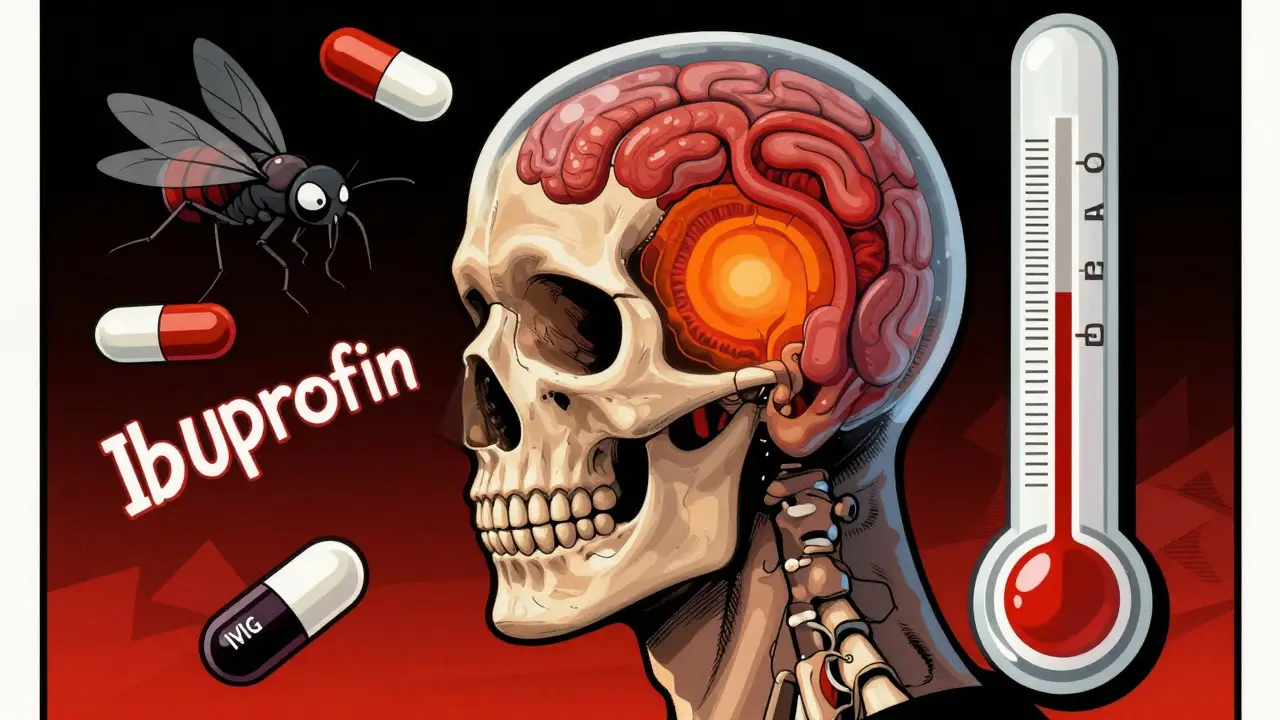
When you get a bad headache, fever, and stiff neck, your first thought might be meningitis. But what if it’s not caused by a virus or bacteria? What if it’s your medication?
Drug-induced aseptic meningitis (DIAM) is real - and it’s more common than most people realize. It happens when certain drugs trigger an inflammatory reaction in the protective layers around your brain and spinal cord, without any infection present. The symptoms look just like bacterial or viral meningitis: intense headache, fever, neck stiffness, sensitivity to light, and sometimes confusion. But here’s the catch: antibiotics won’t help. In fact, giving them could delay the right diagnosis.
How Do Medications Cause Meningitis?
It sounds strange - how can a pill or injection cause brain inflammation? The answer lies in how your immune system reacts. Some drugs trigger what’s called a hypersensitivity response. Your body mistakes the drug or its metabolites for a threat and launches an inflammatory attack on the meninges. This isn’t an allergy like a rash or swelling - it’s deeper, targeting the lining of your central nervous system.
The most common culprits aren’t exotic drugs. They’re everyday prescriptions and over-the-counter medicines. According to data from the French Pharmacovigilance Database, intravenous immunoglobulin (IVIG) tops the list, responsible for nearly 29% of cases. Then come nonsteroidal anti-inflammatory drugs (NSAIDs) like ibuprofen and naproxen - about 22% of cases. Antibiotics, especially trimethoprim-sulfamethoxazole (TMP-SMX), make up another 11%. Even vaccines and newer biologic drugs like monoclonal antibodies have been linked to DIAM, with cases rising sharply since 2010.
People with autoimmune conditions like lupus are at higher risk, especially with NSAIDs. In fact, up to 40% of NSAID-related DIAM cases occur in those with systemic lupus erythematosus. That’s why doctors need to ask not just what you’re taking, but why.
What Do the Symptoms Look Like?
The symptoms of drug-induced aseptic meningitis are nearly identical to infectious meningitis. In fact, 98% of patients report severe headache. About 89% have neck stiffness. Fever shows up in 76%, and photophobia (pain from bright light) in 65%. About 1 in 8 people experience confusion or altered mental status.
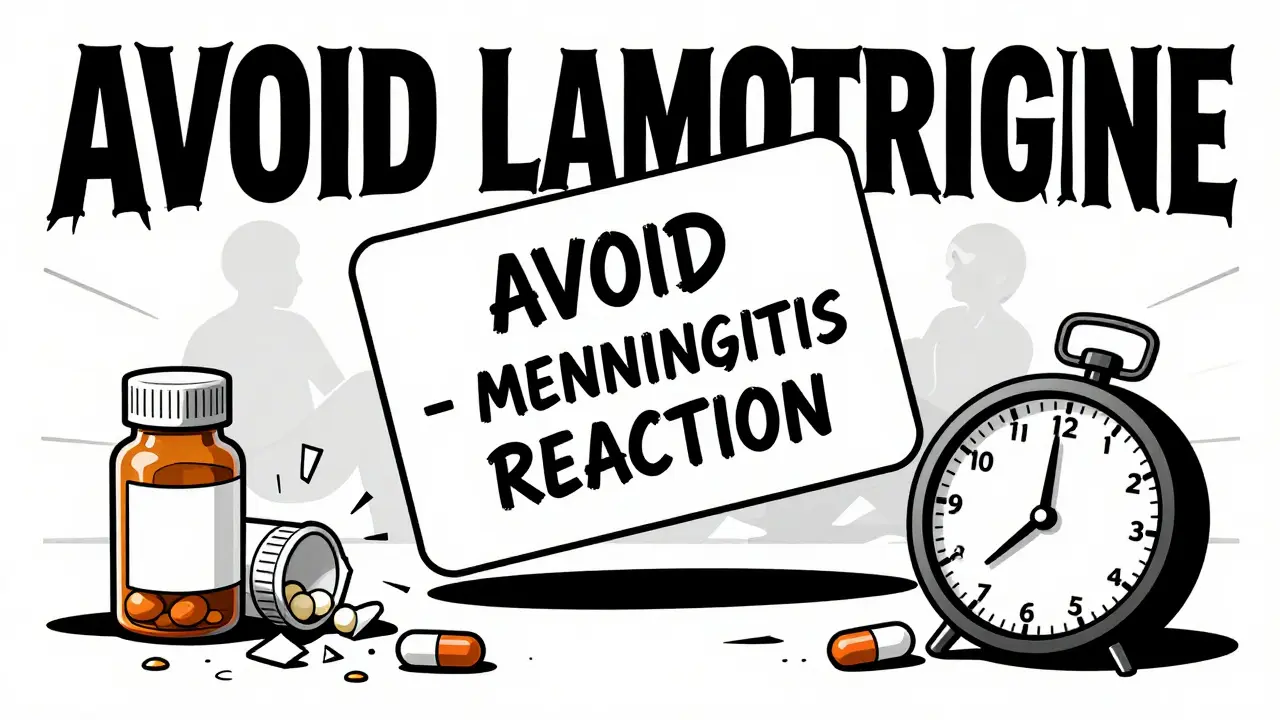
But there’s one big difference: timing. With viral meningitis, symptoms build over days and fade slowly. With DIAM, symptoms usually appear within hours to a few days after taking the drug. For TMP-SMX, it’s often 24 to 72 hours after starting the antibiotic. With lamotrigine (an epilepsy or bipolar drug), symptoms can hit as fast as 60 minutes after a dose - especially if you’ve taken it before and had a reaction.
Here’s what makes it tricky: if you’ve had a previous episode with the same drug, the next reaction is often faster and worse. That’s called rechallenge, and it’s a key diagnostic clue. If your symptoms return after restarting the drug - even weeks later - it’s almost certainly drug-induced.
How Is It Diagnosed?
There’s no single blood test for DIAM. Diagnosis is a process of elimination - and it starts with your medication history.
Doctors need to know everything you’ve taken in the last 72 hours. That includes prescription drugs, OTC painkillers, herbal supplements, and even recent vaccines. Many patients don’t think to mention ibuprofen or a flu shot - but those can be the trigger.
The gold standard is a spinal tap (lumbar puncture) to analyze cerebrospinal fluid (CSF). In DIAM, CSF typically shows:
- White blood cell count between 100 and 1,000 cells/μL (mostly neutrophils)
- Normal glucose levels (ruling out bacterial infection)
- Elevated protein (in about 78% of cases)
- Negative bacterial cultures (the defining feature)
But here’s the problem: these findings look almost exactly like early bacterial meningitis. That’s why doctors often start antibiotics immediately - just in case. The difference comes later: if you’re on antibiotics and your symptoms don’t improve within 24 to 48 hours, and cultures stay negative, DIAM becomes the leading suspect.
According to the American Academy of Neurology’s 2022 guidelines, a firm diagnosis requires four things:
- Symptoms started after taking a specific drug
- No signs of infection, cancer, or autoimmune disease
- Symptoms get better after stopping the drug
- Symptoms return if you take the drug again (when safe to test)
If all four are met, diagnostic certainty jumps to 95%.
Which Drugs Are Most Likely to Cause It?
Not all drugs carry the same risk. Here’s a breakdown of the most common offenders, based on real-world case data:
| Drug Class | Examples | Typical Onset | High-Risk Groups |
|---|---|---|---|
| IV Immunoglobulin | Privigen, Gammagard | Within 24 hours | Immunodeficient patients |
| NSAIDs | Ibuprofen, Naproxen, Diclofenac | Days to weeks (after repeated use) | Lupus patients (35-40% of cases) |
| Antibiotics | Trimethoprim-sulfamethoxazole, Penicillin | 24-72 hours | HIV/AIDS patients (65% of antibiotic cases) |
| Antiepileptics | Lamotrigine | Minutes to hours (after re-exposure) | Those with prior reaction |
| Monoclonal Antibodies | Adalimumab, Infliximab | Hours to days | Rheumatoid arthritis, Crohn’s patients |
| Vaccines | Influenza, MMR, HPV | Within 7 days | Very rare - only 0.3% of post-vaccine cases |
Notice something? Most of these are drugs used for chronic conditions - autoimmune diseases, epilepsy, infections in immunocompromised people. That’s why DIAM is becoming more common. As more people live longer on these medications, the chances of a reaction rise.
What Happens After Diagnosis?
Good news: once you stop the drug, symptoms usually vanish quickly. Most patients feel better within 24 to 72 hours. Headache and fatigue might linger for up to two weeks in about 15% of cases, but full recovery is the norm.
There’s no specific treatment - no steroid or antiviral needed. Just stopping the drug is enough. In rare cases where symptoms are severe, doctors might give a short course of steroids to reduce inflammation faster. But that’s not standard.
What you absolutely must do: avoid the drug forever. Re-exposure can cause a faster, more severe reaction. Some patients have needed hospitalization after restarting a medication they’d taken safely before.
It’s also important to tell every doctor you see - including dentists and specialists - about your history. Put it in your medical records. If you’re on a biologic for rheumatoid arthritis or Crohn’s, your rheumatologist should know this reaction is possible.
Why Is This Often Missed?
DIAM is underdiagnosed for several reasons.
First, doctors are trained to rule out infection first. They don’t think “medication” when they see meningitis symptoms. Second, patients rarely connect their headache to a drug they took days earlier. Third, many cases are mild and resolve on their own - so they’re never reported.
And in cancer patients on chemotherapy, it’s even harder. Drugs like cytosine arabinoside can cause meningitis that looks exactly like DIAM - but it’s from the cancer spreading, not the drug. About 25% of these cases are misdiagnosed.
The rise in biologic therapies has made this even more complicated. Monoclonal antibodies - used for arthritis, psoriasis, and cancer - are now responsible for nearly 9% of DIAM cases, up from just 2% in 2010. These drugs are powerful, and their immune effects aren’t fully understood yet.
What Should You Do If You Suspect It?
If you’re on any of these medications and suddenly develop meningitis-like symptoms:
- Stop taking the drug immediately (unless told otherwise by your doctor)
- Seek medical care - don’t wait
- Bring a full list of all medications, including supplements and recent vaccines
- Ask: “Could this be drug-induced meningitis?”
- Insist on a spinal tap if symptoms persist beyond 48 hours
And if you’ve had DIAM before: carry a medical alert card or note in your phone. Write down the drug name, when it happened, and what symptoms you had. That information could save your life next time.
Drug-induced aseptic meningitis isn’t common - but it’s serious, preventable, and often reversible. The key is awareness. For patients on long-term meds, it’s not just about side effects like nausea or dizziness. It’s about knowing that your brain and spine can react, too.
Can over-the-counter painkillers like ibuprofen cause aseptic meningitis?
Yes. NSAIDs like ibuprofen, naproxen, and diclofenac are among the top causes of drug-induced aseptic meningitis. They account for about 22% of reported cases. The risk is higher in people with lupus or other autoimmune conditions, where up to 40% of NSAID-related cases occur. Symptoms usually appear after repeated use, not after a single dose.
How is drug-induced meningitis different from viral meningitis?
Both cause similar symptoms - headache, fever, stiff neck. But viral meningitis usually resolves on its own in 7-10 days without treatment. Drug-induced meningitis improves within 24-72 hours after stopping the medication. CSF results look nearly identical, so the key difference is timing: did symptoms start after taking a new drug? Did they get better after stopping it? That’s what doctors look for.
Is a spinal tap always necessary to diagnose it?
Yes. While doctors may suspect DIAM based on symptoms and medication history, only a spinal tap can confirm it. The CSF must show elevated white blood cells, normal glucose, and no bacteria. Without this test, you can’t rule out bacterial meningitis - which is life-threatening and needs immediate antibiotics.
Can vaccines cause aseptic meningitis?
Rarely. Only about 0.3% of meningitis cases after vaccination are true drug-induced cases. Most are coincidental viral infections that happen to occur around the same time. Vaccines like MMR, flu, and HPV have been linked to a few cases, but the risk is extremely low. The benefits of vaccination far outweigh this minimal risk.
Will I have to avoid all medications after having drug-induced meningitis?
No - only the specific drug that caused it. You don’t need to avoid all antibiotics, NSAIDs, or biologics. But you must avoid the exact medication that triggered the reaction. Keep a record of the drug name and symptoms. Tell every doctor you see. Re-exposure can cause a faster, more severe reaction, sometimes requiring hospitalization.
Can drug-induced meningitis come back years later?
Yes. Even if you haven’t taken the drug for months or years, restarting it can trigger symptoms again - sometimes within minutes. This is called rechallenge, and it’s one of the strongest signs that the drug caused the original reaction. Never restart a medication that caused meningitis unless under strict medical supervision.
What’s Next for Diagnosis and Treatment?
Researchers are working on better ways to tell DIAM apart from infection. A 2023 NIH study is looking at cytokine patterns in spinal fluid - specific proteins that might signal a drug reaction versus a virus. If successful, this could lead to a blood or CSF test that avoids the guesswork.
For now, the best tool is still the patient’s story: when did the symptoms start? What did you take? Did they get better after stopping? Did they return when you tried it again?
As more people take powerful, long-term medications, doctors need to think beyond infections. Aseptic meningitis isn’t rare - it’s hidden. And the only way to find it is to ask the right questions - and listen to the answers.
Jaspreet Kaur Chana
January 15, 2026 AT 12:35Man, I never thought ibuprofen could do this to you. I’ve been popping Advil like candy since college - headaches, cramps, even just because I felt like it. Now I’m sitting here wondering if that time I had a crazy headache and stiff neck after a marathon? Could’ve been this. Scary how something so common can sneak up on you. And yeah, I get it - people with lupus are way more at risk, but honestly, anyone on long-term meds should be paying attention. I’m gonna start keeping a log of every pill I take, just in case.
ellen adamina
January 17, 2026 AT 05:18I had this happen after taking TMP-SMX for a UTI. Symptoms hit at 48 hours - headache so bad I cried, neck like concrete, light felt like needles. ER thought it was bacterial, gave me antibiotics, I got worse. Finally a neurologist asked what I’d taken. I mentioned the antibiotic like it was nothing. They did the LP and said ‘this is drug-induced.’ Stopped it. 36 hours later I was back to normal. Never took it again. Doctors don’t ask enough about meds. They just see fever and rush to antibiotics.
Ayush Pareek
January 17, 2026 AT 06:49This is one of those posts that makes you pause and think. I work with a lot of patients on biologics for rheumatoid arthritis and Crohn’s, and I’ve seen a few cases like this. The thing is - they often don’t connect the dots. They come in with ‘flu-like symptoms’ and say ‘I just started my Humira last week.’ We don’t always think meningitis. But once you know, it’s so clear. Stop the drug, watch them improve. No steroids needed. Just awareness. I always tell my patients: if something new pops up after starting a new med - even if it seems unrelated - speak up. Your brain matters too.
Nicholas Urmaza
January 18, 2026 AT 17:23Let’s be real - this isn’t some rare edge case. It’s a systemic failure in medical training. Doctors are taught to treat symptoms like infections first, not to question the meds. That’s lazy. IVIG? NSAIDs? Antibiotics? These are the top offenders and yet we still treat every stiff neck like it’s a death sentence requiring antibiotics. The fact that this is underdiagnosed isn’t because it’s rare - it’s because doctors don’t want to admit they might’ve messed up. Stop giving antibiotics blindly. Start asking what the patient took. That’s not hard.
Sarah Mailloux
January 20, 2026 AT 11:47I’m a nurse and I’ve had patients come in with this and they’re terrified because they think they have meningitis. Once we figure out it’s drug-induced they’re relieved but also kind of mad - like ‘why didn’t my doctor tell me this could happen?’ I always hand them a little card with the drug name and symptoms written down. They’re usually shocked to learn it’s reversible. Just stop the med and boom - you’re fine. But if you don’t know it’s drug-related, you might get stuck with unnecessary treatment or even misdiagnosed as having something worse. Awareness saves lives.
Nilesh Khedekar
January 21, 2026 AT 20:22Oh wow, so now even my ibuprofen is trying to kill me? That’s great. Just what I needed - another reason to be paranoid about every pill I swallow. First it was vaccines, then gluten, now NSAIDs? Next thing you know, breathing will cause meningitis. And let’s not forget the 0.3% vaccine risk - yeah, that’s basically ‘your kid might die from a flu shot’ territory. Meanwhile, actual infectious meningitis kills people in hours. But sure, let’s panic about the 1 in 300,000 chance that Advil gave you a headache. I’m just glad I don’t live in a country where doctors are this easily scared.
Jami Reynolds
January 22, 2026 AT 06:33Did you know the CDC has been quietly suppressing data on drug-induced meningitis because pharmaceutical companies don’t want people to know how dangerous their drugs really are? The real numbers are 10x higher than reported. IVIG? NSAIDs? Biologics? All of them are designed to suppress the immune system - and that’s exactly why they trigger this. The same companies that profit from these drugs also fund the medical schools that teach doctors to ignore the signs. The rise since 2010? Coincidence? Or the result of more aggressive marketing and less oversight? Ask yourself - who benefits when you think it’s just ‘viral’? Not you.
Amy Ehinger
January 23, 2026 AT 03:39I had this happen with lamotrigine. Took it for bipolar, had a bad reaction after a dose - headache, nausea, neck so stiff I couldn’t turn my head. Thought I was having a stroke. Went to ER, they did a CT, said ‘nothing’s bleeding,’ sent me home. Three days later I told my psych doctor and he said ‘oh yeah, that’s a known thing.’ We stopped it. Within 24 hours I felt human again. Honestly, I didn’t even know it could do that. I thought side effects were just dizziness or acne. Turns out your brain can go ‘nope’ to a pill. I keep a little note in my phone now - ‘lamotrigine = meningitis.’ I show it to every new doctor. Best thing I ever did.