
 Feb, 17 2026
Serotonin Syndrome Risk Assessment Tool
Risk Assessment
Your Risk Assessment
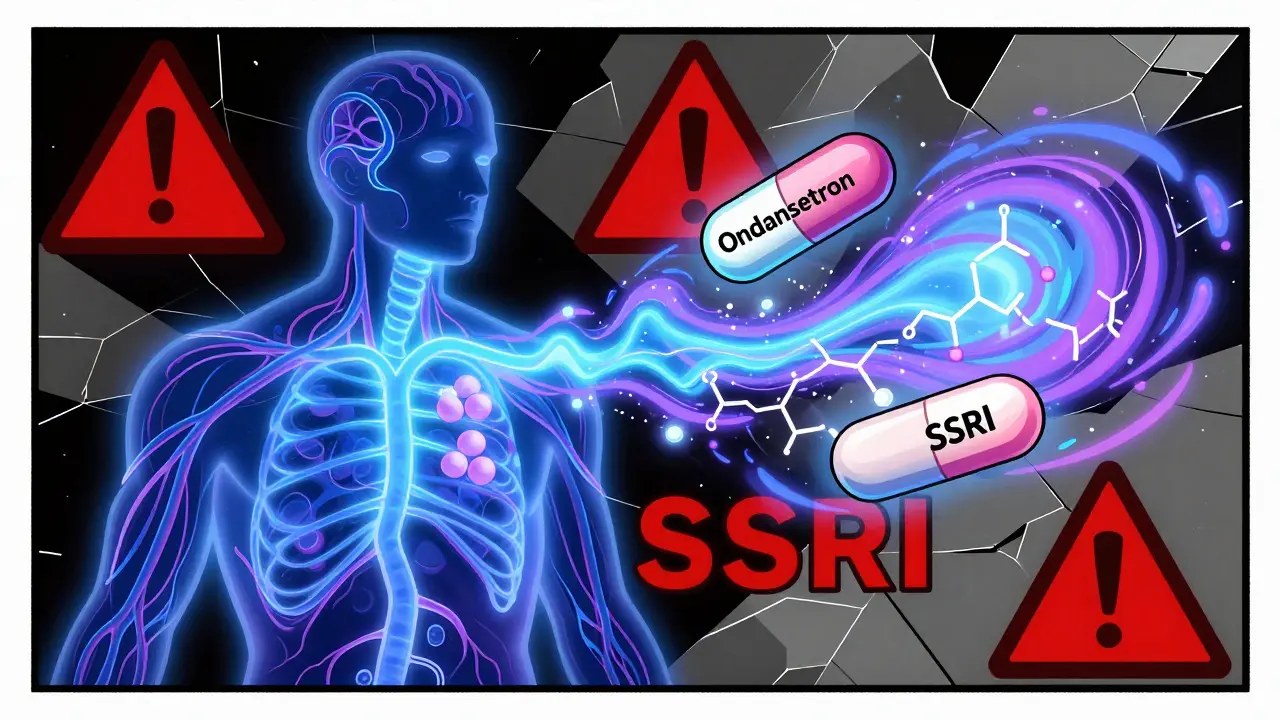
Every year, millions of people take antiemetics like ondansetron to control nausea - after surgery, during chemotherapy, or even for morning sickness. At the same time, over 15 million Americans are on SSRIs or other antidepressants to manage depression or anxiety. What happens when these two types of medications overlap? The answer isn’t always simple, and in rare but serious cases, it can trigger something called serotonin syndrome.
What Is Serotonin Syndrome?
Serotonin syndrome isn’t a common cold or a mild side effect. It’s a medical emergency caused by too much serotonin building up in your nervous system. Think of serotonin as a chemical messenger that helps regulate mood, digestion, and muscle control. When it floods your system, your body can’t handle it. Symptoms usually show up within hours of taking a new drug or increasing a dose. You might feel shaky, sweaty, or confused. Your muscles could twitch uncontrollably. Your reflexes might go into overdrive. In the worst cases, your temperature spikes, your heart races, and you lose awareness of your surroundings.This isn’t just theoretical. Between 2004 and 2011, cases of serotonin syndrome rose by 14% every year, according to the FDA’s own reporting system. And while most cases involve combinations of antidepressants - like an SSRI with an MAOI - antiemetics are showing up more often in the mix.
Why Do Antiemetics Like Ondansetron Matter?
Ondansetron (sold as Zofran) is one of the most commonly prescribed antiemetics in the U.S. It works by blocking 5-HT3 receptors, which are mostly found in the gut and brainstem. That’s why it’s so good at stopping nausea from chemo or surgery. But here’s the twist: even though it blocks one type of serotonin receptor, it doesn’t just sit quietly. Studies suggest it might have unintended effects on other parts of the serotonin system.A 2017 case report in the Journal of Medical Toxicology described a 62-year-old man who developed serotonin syndrome after taking ondansetron with citalopram - an SSRI. He had no other medications. That case alone raised eyebrows. Since then, over 1,200 patient reviews on Drugs.com show a pattern: while most people find ondansetron effective, nearly half rate its safety as low when taken with antidepressants. Reddit threads from mental health communities echo this - dozens of users describe tremors, confusion, and hospital visits after getting ondansetron at the dentist while on SSRIs.
It’s not just ondansetron. Granisetron and dolasetron - other 5-HT3 blockers - have shown similar, though less frequent, links. And while these drugs aren’t designed to boost serotonin, they may interfere with how your body clears it. That’s especially true if you’re a poor metabolizer of CYP2D6, a liver enzyme that breaks down both ondansetron and many SSRIs. About 7-10% of white patients have a genetic variation that makes this enzyme work poorly. In those people, ondansetron levels can spike 2.3 times higher than normal, increasing the chance of serotonin overload.
Other Antiemetics and Their Risks
Not all antiemetics act the same way. Here’s how the major classes compare:- 5-HT3 antagonists (ondansetron, granisetron): These are the most commonly implicated. They block nausea-triggering receptors but may have off-target effects on serotonin reuptake or metabolism. The FDA has recorded at least 12 post-marketing cases linking them to serotonin syndrome.
- Dopamine antagonists (metoclopramide): This one’s tricky. Metoclopramide is used for gastroparesis and reflux. It has weak serotonin reuptake inhibition - meaning it can accidentally increase serotonin levels. The FDA confirmed 17 cases between 2004 and 2018 when it was combined with SSRIs.
- NK1 antagonists (aprepitant): These are used for severe nausea, especially in cancer patients. They don’t directly affect serotonin, but they slow down the CYP3A4 enzyme. If you’re taking an SSRI that’s broken down by CYP3A4 - like sertraline or escitalopram - aprepitant can cause it to build up in your blood.
- Dexamethasone: This steroid is sometimes used as an antiemetic. The good news? It has zero serotonergic activity. If you’re on multiple antidepressants and need nausea control, this might be the safest option.

Who’s Most at Risk?
Age matters. People over 65 make up just 18.7% of the U.S. population, but they account for over 41% of serotonin syndrome cases involving ondansetron and SSRIs. Why? Older adults often take more medications, have slower liver and kidney function, and are more likely to have genetic variations that affect drug metabolism.Another hidden risk factor: polypharmacy. If you’re on two or more serotonergic drugs - say, an SSRI, a tramadol for pain, and an ondansetron for nausea - your risk jumps dramatically. In fact, 85% of documented serotonin syndrome cases involve drug combinations, according to the American Academy of Family Physicians. Single-drug cases are rare but possible, especially in people with genetic vulnerabilities.
How to Spot It - The Hunter Criteria
Doctors don’t guess when they suspect serotonin syndrome. They use a tool called the Hunter Serotonin Toxicity Criteria. It’s been tested on over 1,000 patients and is 84% accurate at catching real cases. You have serotonin syndrome if you’re taking a serotonergic drug and have one of these:- Spontaneous clonus (involuntary muscle contractions)
- Inducible clonus + agitation or diaphoresis
- Obsessive tremor + hyperreflexia
- Hyperreflexia + clonus + fever
- Loss of consciousness + hyperreflexia
The most common signs? Tremors (78% of cases), overactive reflexes (63%), and mental confusion (54%). If you’re on an SSRI and get ondansetron, then start shaking or feel unusually anxious, don’t wait. Go to the ER.
What Should You Do?
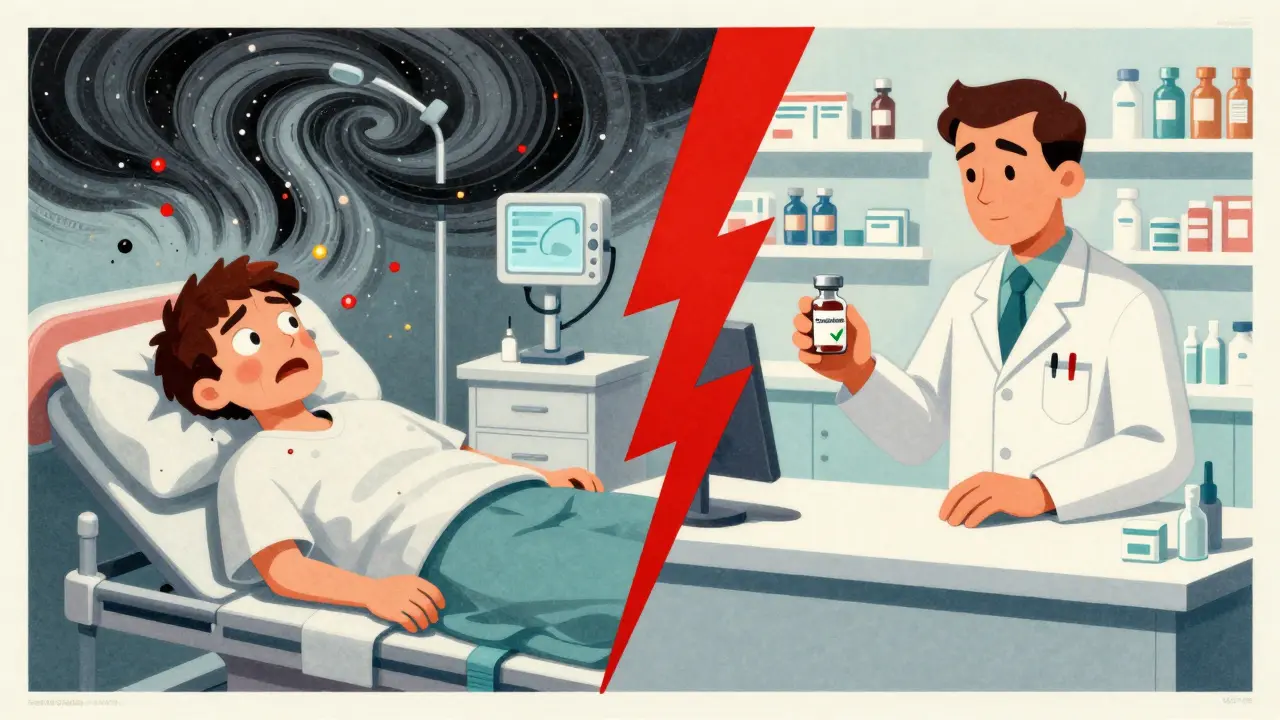
If you’re taking an SSRI, SNRI, or MAOI and need an antiemetic:- Check your meds. List every drug you take - including over-the-counter ones. Tramadol, dextromethorphan, and even St. John’s Wort can add to the risk.
- Ask about alternatives. Dexamethasone is often just as effective for nausea and carries zero serotonin risk. In some hospitals, it’s now the first choice for patients on antidepressants.
- Consider your genetics. If you’re of European descent and have a history of bad reactions to medications, ask about CYP2D6 testing. It’s not routine, but it’s available.
- Don’t panic - but be cautious. The FDA still says the benefits of ondansetron outweigh the risks. But they also say: use it wisely. Avoid combining it with MAOIs. Reduce the dose if you’re on a strong CYP2D6 inhibitor like fluoxetine.
If serotonin syndrome is suspected, stop all serotonergic drugs immediately. The antidote? Cyproheptadine - an antihistamine that blocks serotonin receptors. It’s given orally in 4-8 mg doses every two hours until symptoms improve. In severe cases, sedation with dexmedetomidine is showing better results than benzodiazepines in recent studies.
What’s Changing in 2026?
New guidelines are coming. In January 2023, the Clinical Pharmacogenetics Implementation Consortium recommended CYP2D6 testing before prescribing ondansetron to patients on SSRIs - especially those over 60. The Society of Critical Care Medicine now classifies ondansetron as “moderate risk” with SSRIs and “high risk” with MAOIs.And there’s a promising shift: palonosetron, a second-generation 5-HT3 blocker, appears to carry less risk. A 2023 study of 1,247 patients found switching from ondansetron to palonosetron cut serotonin syndrome risk by over 60%. It’s more expensive, but for high-risk patients, it’s worth considering.
Pharmaceutical companies are updating labels. GlaxoSmithKline added a warning about serotonin syndrome to Zofran’s prescribing info in 2022. The American Geriatrics Society now advises avoiding ondansetron entirely in older adults taking MAOIs.
Bottom Line
Serotonin syndrome from antiemetics is rare - about 4.2 cases per 100,000 prescriptions. But when it happens, it can be deadly. The risk isn’t from one drug alone. It’s from the combination. If you’re on an antidepressant and your doctor prescribes ondansetron, don’t assume it’s safe. Ask: Is there a better option? Am I at higher risk because of my age, my genes, or my other meds? A quick conversation could prevent a trip to the ICU.Can ondansetron cause serotonin syndrome by itself?
No - ondansetron alone almost never causes serotonin syndrome. Every documented case involves another serotonergic drug, like an SSRI, SNRI, or MAOI. It’s the combination that’s dangerous. Even then, the risk is low unless you have other factors like age, genetics, or liver problems.
Is serotonin syndrome the same as an allergic reaction?
No. An allergic reaction involves your immune system and usually causes rashes, swelling, or trouble breathing. Serotonin syndrome is a neurological overdose - your brain and nerves get flooded with too much serotonin. Symptoms include tremors, confusion, high reflexes, and fever. The treatment is completely different.
What antiemetic is safest with SSRIs?
Dexamethasone is the safest choice - it has no effect on serotonin. Metoclopramide carries moderate risk, and ondansetron carries low-to-moderate risk depending on your other meds and genetics. If you’re on multiple serotonergic drugs, talk to your doctor about switching to dexamethasone or palonosetron.
Should I get genetic testing before taking ondansetron?
If you’re over 60, taking an SSRI, and have had unexplained side effects from medications in the past, yes. About 7-10% of people of European descent are poor metabolizers of CYP2D6, which can cause ondansetron to build up to dangerous levels. Testing isn’t routine yet, but it’s becoming more common in hospitals.
How long does it take for serotonin syndrome to go away?
Mild cases usually resolve in 24-72 hours after stopping all serotonergic drugs. Severe cases may need ICU care and can take up to a week. Cyproheptadine speeds up recovery. If symptoms persist beyond 72 hours, another cause - like infection or another drug reaction - is likely.
Tommy Chapman
February 19, 2026 AT 03:02Irish Council
February 20, 2026 AT 13:00Robin bremer
February 22, 2026 AT 05:14Maddi Barnes
February 23, 2026 AT 18:45Jayanta Boruah
February 24, 2026 AT 11:42Hariom Sharma
February 25, 2026 AT 19:34Benjamin Fox
February 25, 2026 AT 20:01Jonathan Rutter
February 26, 2026 AT 19:01Jana Eiffel
February 27, 2026 AT 04:06The ethical dilemma here is not merely pharmacological but epistemological. We have constructed a medical paradigm that prioritizes efficiency over vigilance. The convenience of prescribing ondansetron to patients with nausea is juxtaposed against the moral obligation to understand the neurochemical cascade we are manipulating. Are we treating patients - or are we optimizing outcomes within a system that commodifies biological complexity? The answer lies not in data points, but in humility. Medicine must return to its roots: observation, caution, and reverence for the human organism.
aine power
February 28, 2026 AT 07:23Freddy King
March 1, 2026 AT 14:44Laura B
March 2, 2026 AT 08:18John Cena
March 3, 2026 AT 20:06Taylor Mead
March 4, 2026 AT 06:52