
 May, 20 2026
That throbbing headache or that stiff knee after a long hike feels like it demands immediate attention. You reach for the medicine cabinet, but which bottle do you grab? The white tablets of Acetaminophen is a widely used over-the-counter analgesic and antipyretic that works primarily in the central nervous system to block pain signals and reduce fever without affecting inflammation. Commonly known by brand names such as Tylenol, it was first synthesized in 1878 and has become a cornerstone of household medicine due to its gentle impact on the stomach. or the colored capsules of an NSAID is a nonsteroidal anti-inflammatory drug that reduces pain, fever, and swelling by inhibiting cyclooxygenase (COX) enzymes throughout the body, thereby decreasing prostaglandin production. Popular examples include ibuprofen (Advil, Motrin), naproxen (Aleve), and aspirin, which are essential for treating conditions involving tissue irritation and joint stiffness.? It’s not just about picking a brand; it’s about matching the chemistry to your specific body complaint. Using the wrong one might mean waiting longer for relief or risking unnecessary side effects.
The core difference isn't subtle-it's structural. Acetaminophen targets your brain’s perception of pain, while NSAIDs attack the source of inflammation in your muscles and joints. Understanding this distinction helps you stop guessing and start treating effectively. Let’s break down exactly how these two giants of over-the-counter medicine work, who should take them, and what risks you need to watch out for in 2026.
How They Work: Brain vs. Body
To choose the right painkiller, you have to understand where the action happens. Acetaminophen operates almost exclusively in your central nervous system. Think of it as a volume knob for pain signals traveling to your brain. It raises your pain threshold, meaning you feel less discomfort from the same stimulus. It doesn’t touch the swelling or redness at the injury site because it doesn’t inhibit the COX enzymes in the rest of your body.
NSAIDs, on the other hand, are systemic workers. They travel through your bloodstream and block COX-1 and COX-2 enzymes everywhere. These enzymes produce prostaglandins, chemicals that cause inflammation, pain, and fever. By stopping prostaglandin production, NSAIDs reduce the actual swelling and irritation causing your pain. This is why they are superior for injuries like sprains, arthritis flares, or menstrual cramps where inflammation is the primary culprit.
| Feature | Acetaminophen | NSAIDs (Ibuprofen, Naproxen) |
|---|---|---|
| Primary Target | Central Nervous System (Brain) | Throughout the Body (Systemic) |
| Reduces Inflammation? | No | Yes |
| Reduces Fever? | Yes | Yes |
| Key Enzyme Blocked | COX enzymes in the brain only | COX-1 and COX-2 enzymes systemically |
| Best For | Headaches, general aches, fever | Sprains, arthritis, menstrual cramps, swelling |
When to Choose Acetaminophen
Acetaminophen is often the safest starting point for mild pain. If you have a tension headache, a sore throat, or a fever from a cold, this is usually your best bet. It is particularly favored for people with sensitive stomachs. Unlike NSAIDs, it does not irritate the lining of the gastrointestinal tract. You can take it on an empty stomach without worrying about heartburn or nausea.
It is also the gold standard for specific vulnerable groups. According to guidelines from University of Utah Health, acetaminophen is the only recommended over-the-counter analgesic for pregnant women and children under six months old. For older adults who may have compromised kidney function or cardiovascular issues, acetaminophen poses fewer risks than chronic NSAID use. However, "safe" does not mean "risk-free." The liver processes acetaminophen, and exceeding the limit can cause severe damage.
A critical rule to remember: check every label. Many multi-symptom cold and flu medicines contain hidden acetaminophen. Combining a standalone pain reliever with a cold syrup can easily push you over the safe daily limit. The FDA recommends a maximum of 4,000 milligrams per day, but many experts suggest capping it at 3,000 milligrams to stay well within the safety margin.
When to Choose NSAIDs
If your pain comes with swelling, heat, or redness, NSAIDs are the clear winner. Ibuprofen and naproxen are significantly more effective for inflammatory conditions. Research from the American Academy of Family Physicians shows NSAIDs are 20-30% more effective than acetaminophen for inflammatory pain. If you twisted your ankle, have osteoarthritis in your knees, or are dealing with painful menstrual cramps, acetaminophen will likely fall short. NSAIDs tackle the root cause-the inflammation-rather than just masking the signal.
Ibuprofen acts quickly, typically providing relief within 30 minutes, but its effects wear off faster, requiring doses every 4 to 6 hours. Naproxen lasts longer, covering 8 to 12 hours per dose, which makes it convenient for overnight pain management or all-day coverage with fewer pills. Aspirin, another NSAID, is rarely used for general pain today due to its higher risk of stomach bleeding, but it remains unique for its blood-thinning properties in preventing heart attacks.
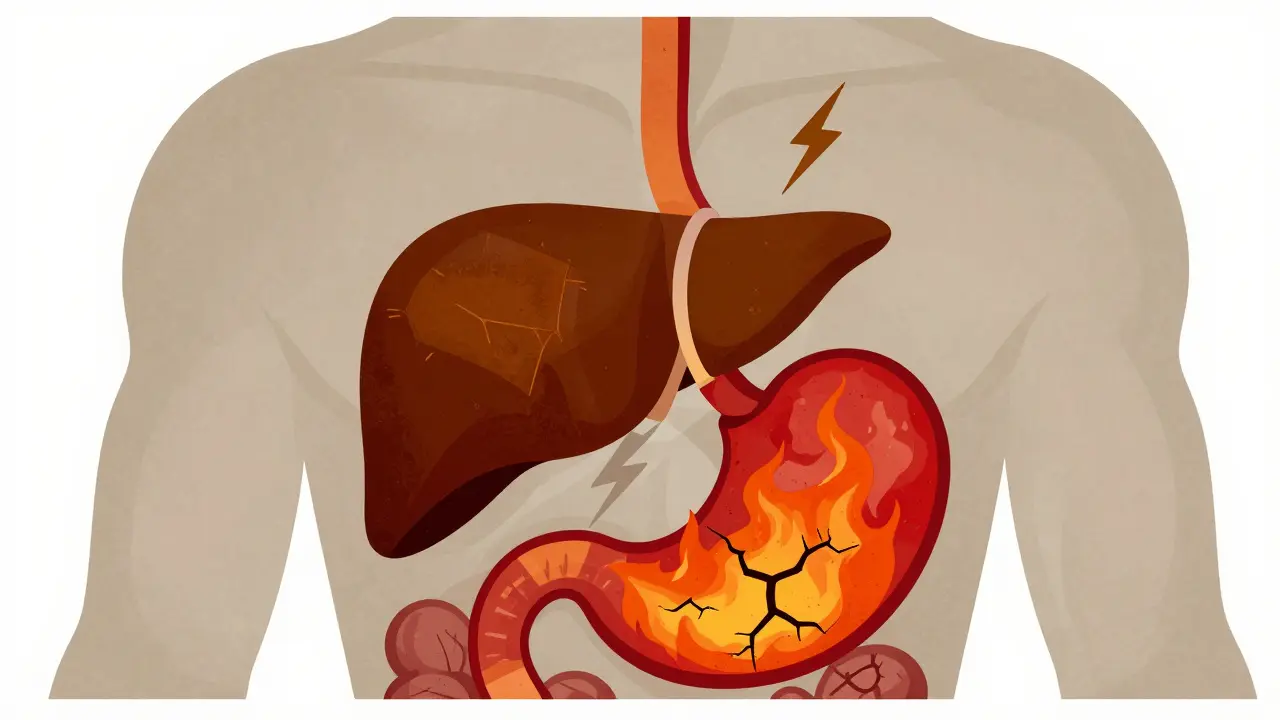
The trade-off for this effectiveness is gastrointestinal stress. NSAIDs strip away the protective mucus layer in your stomach. Users face a 2-4% annual risk of developing stomach ulcers, compared to less than 0.5% for acetaminophen users. To mitigate this, always take NSAIDs with food or milk. If you need them frequently, talk to your doctor about adding a stomach acid inhibitor like famotidine.
Safety Risks and Side Effects
Both medications carry serious risks if misused, but they affect different organs. Acetaminophen’s danger zone is the liver. Overdose is the leading cause of acute liver failure in the United States. The CDC reports approximately 15,000 hospitalizations annually from acetaminophen overdose, many of which are unintentional due to combining products. Symptoms of toxicity don’t appear immediately, which makes accidental overdose particularly dangerous. Stick strictly to the dosage instructions and never exceed the daily limit.
NSAIDs pose risks to the heart and kidneys. Chronic high-dose use of ibuprofen can increase the risk of heart attack by 10-50%, according to FDA warnings. The American Heart Association advises limiting NSAID use in patients with established cardiovascular disease. Naproxen generally carries a lower cardiovascular risk than ibuprofen, making it a slightly safer option for those with heart concerns, though caution is still required. Additionally, long-term NSAID use can impair kidney function by reducing blood flow to the kidneys, which is why hydration is crucial when taking these drugs.
| Risk Area | Acetaminophen | NSAIDs |
|---|---|---|
| Liver Toxicity | High risk with overdose | Low risk |
| Stomach Ulcers/Bleeding | Very low risk (<0.5%) | Moderate to High risk (2-4% annually) |
| Cardiovascular Risk | Minimal | Increased risk with chronic high-dose use |
| Kidney Impact | Minimal | Potential impairment with long-term use |
| Blood Thinning | No effect | Aspirin thins blood; others minimal |
Dosing Guidelines and Limits
Getting the dose right is half the battle. For acetaminophen, the standard adult dose is 325 to 650 milligrams every 4 to 6 hours. Do not exceed 4,000 milligrams in 24 hours. Many experts now recommend a stricter cap of 3,000 milligrams to account for variations in individual liver metabolism and potential hidden sources in other medications.
For ibuprofen, the over-the-counter limit is 1,200 milligrams per day, typically taken as 200 to 400 milligrams every 4 to 6 hours. Prescription strengths allow up to 3,200 milligrams, but you should never self-medicate beyond the OTC limit without medical supervision. Naproxen sodium is dosed differently: 220 milligrams every 8 to 12 hours, with a maximum of 660 milligrams per day. Its longer duration means fewer doses, which improves compliance but requires careful timing to avoid gaps in pain relief.
A common mistake is doubling up when pain persists. If one pill doesn’t work, taking two doesn’t necessarily help and drastically increases side effect risks. Instead, consider alternating. Harvard Health suggests that taking acetaminophen along with an NSAID can provide synergistic relief. Because they work through different mechanisms, you can use lower doses of both, minimizing side effects while maximizing pain control. Just keep a strict schedule to avoid accidental overdose.

Special Populations: Children, Pregnancy, and Elderly
Medication choices change dramatically based on age and health status. For infants under six months, acetaminophen is the sole recommended OTC option. Pediatric dosing is weight-based, typically 10 to 15 mg/kg per dose. Never give aspirin to children due to the risk of Reye’s syndrome, a rare but life-threatening condition. For older children, ibuprofen is safe and effective for fever and pain, but always follow the weight-based chart on the packaging.
Pregnant women should stick to acetaminophen. NSAIDs are generally avoided, especially in the third trimester, as they can cause premature closure of the fetal ductus arteriosus and reduce amniotic fluid levels. Always consult your obstetrician before taking any medication during pregnancy.
Elderly patients face increased risks with both classes. Age-related decline in kidney and liver function means metabolizing drugs takes longer. NSAIDs pose a higher risk of stomach bleeding and kidney damage in seniors. Acetaminophen is often preferred, but the dose may need adjustment. Regular monitoring by a healthcare provider is essential for anyone over 65 taking pain relievers regularly.
Combining Strategies for Maximum Relief
You don’t always have to choose just one. For moderate to severe pain, such as post-surgical recovery or acute back spasms, combining acetaminophen and an NSAID can be highly effective. Studies show this combination provides better pain relief than either drug alone at equivalent doses. The key is staggering the doses. Take acetaminophen, then wait four hours, take an NSAID, wait four hours, and repeat. This maintains steady blood levels of both drugs without exceeding daily limits.
However, never combine two different NSAIDs. Taking ibuprofen and naproxen together does not improve pain relief but triples the risk of stomach bleeding. Stick to one NSAID at a time. Also, be cautious with alcohol. Drinking alcohol while taking acetaminophen significantly increases liver toxicity risk. Alcohol combined with NSAIDs increases the chance of stomach ulcers. Moderation or avoidance is best when managing pain.
Can I take acetaminophen and ibuprofen together?
Yes, you can safely take acetaminophen and ibuprofen together or alternate them. Since they work through different mechanisms, combining them can provide better pain relief than using either alone. Just ensure you do not exceed the maximum daily dose for each medication: 3,000-4,000 mg for acetaminophen and 1,200 mg for ibuprofen. Staggering doses every 4-6 hours is a common strategy.
Which is better for headaches: acetaminophen or NSAIDs?
For typical tension headaches, both are effective, but acetaminophen is often preferred due to its gentler impact on the stomach. For migraines, NSAIDs like ibuprofen or naproxen are generally more effective because they address the inflammatory component of migraine pain. Many migraine sufferers report better results with NSAIDs, though individual responses vary.
Is naproxen stronger than ibuprofen?
Naproxen is not necessarily "stronger" in terms of potency per milligram, but it lasts longer. A single dose of naproxen can provide pain relief for 8-12 hours, whereas ibuprofen lasts 4-6 hours. This makes naproxen more convenient for long-lasting pain, such as osteoarthritis, while ibuprofen is better for quick, short-term relief.
What are the signs of acetaminophen overdose?
Early symptoms of acetaminophen overdose are often vague and include nausea, vomiting, loss of appetite, and sweating. These may disappear after 24 hours, creating a false sense of security. Liver damage symptoms, such as abdominal pain, jaundice (yellowing of skin/eyes), and confusion, appear later. Immediate medical attention is critical if you suspect an overdose, even if you feel fine initially.
Can I take NSAIDs if I have high blood pressure?
NSAIDs can raise blood pressure and interfere with blood pressure medications. If you have hypertension, use NSAIDs cautiously and monitor your blood pressure closely. Acetaminophen is generally a safer alternative for pain relief in individuals with high blood pressure. Always consult your doctor before starting regular NSAID use if you have cardiovascular conditions.